


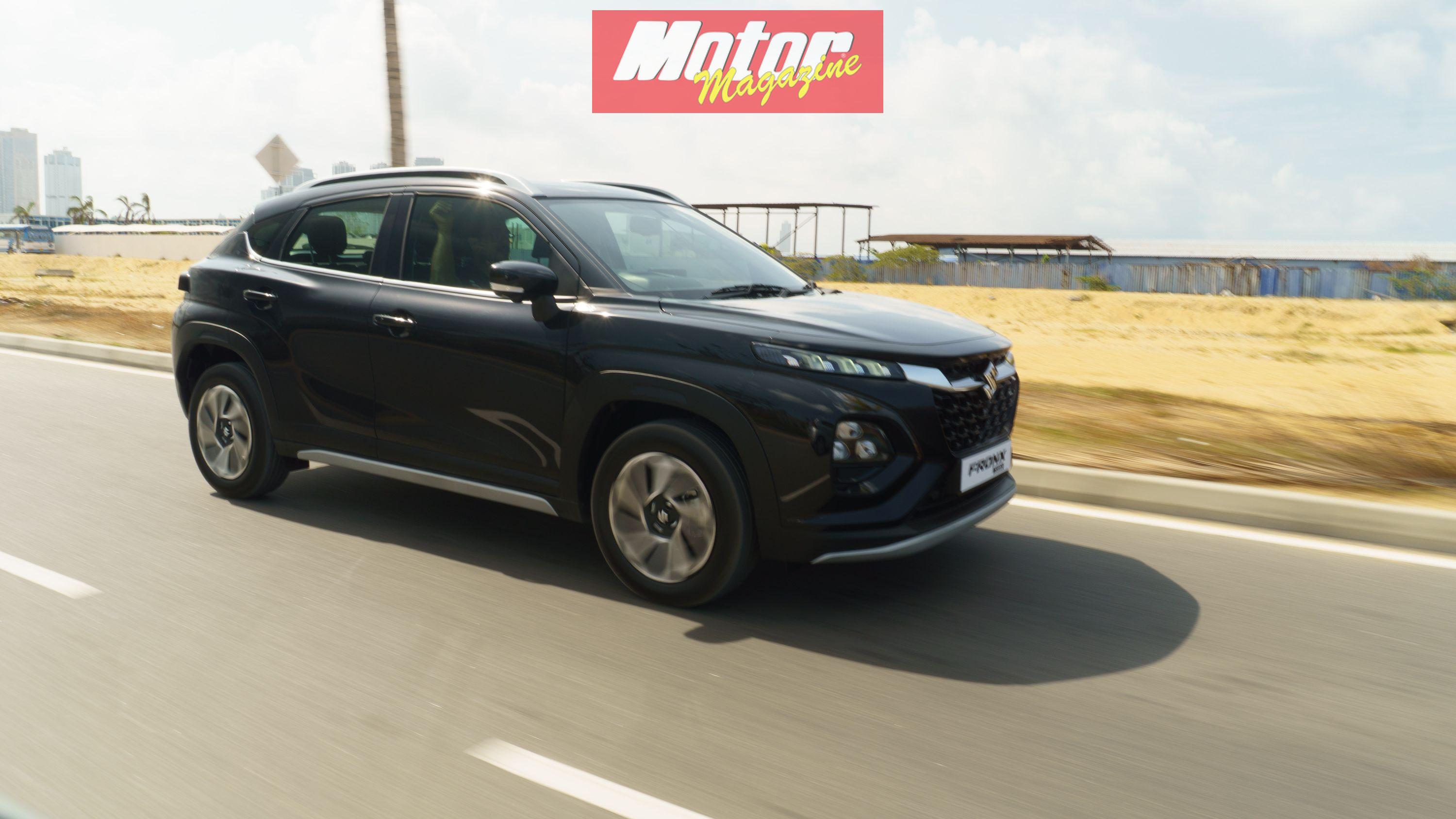
EVs, EVs, EVs. That’s what we’ve been mostly sampling for the past many months. That’s also why it was a breath of fresh air to check out the latest Suzuki Fronx in Alpha AT 1.0L Turbo guise, as brought down by Associated Motorways, official agents for Suzuki in Sri Lanka. Suzuki is probably one of the most recognizable auto brands in the country, level with the Big T thanks to their adaptable Alto, curious Celerio and many others. The Fronx is their Latest Hit, and it was introduced to the world in 2023. Positioned as a subcompact crossover, it’s got an internal combustion power-plant under the hood, a proper automatic transmission, and a whole lot of kit to offer.
Let’s see how the Fronx fares
amidst stiff EV competition within its price bracket. It’s also badged as the
Toyota Urban Cruiser Taisor in India, and the Toyota Starlet Cross in some
African markets. The Fronx is made in India, but it’s also exported to many
other countries, including Australia, South Africa, Mexico, the Phillipines,
and, most surprising of all, Japan. As Steve Carrell’s character from The
Office, Michael Scott once said, “Well, Well, Well, How the Turntables…”
Exterior
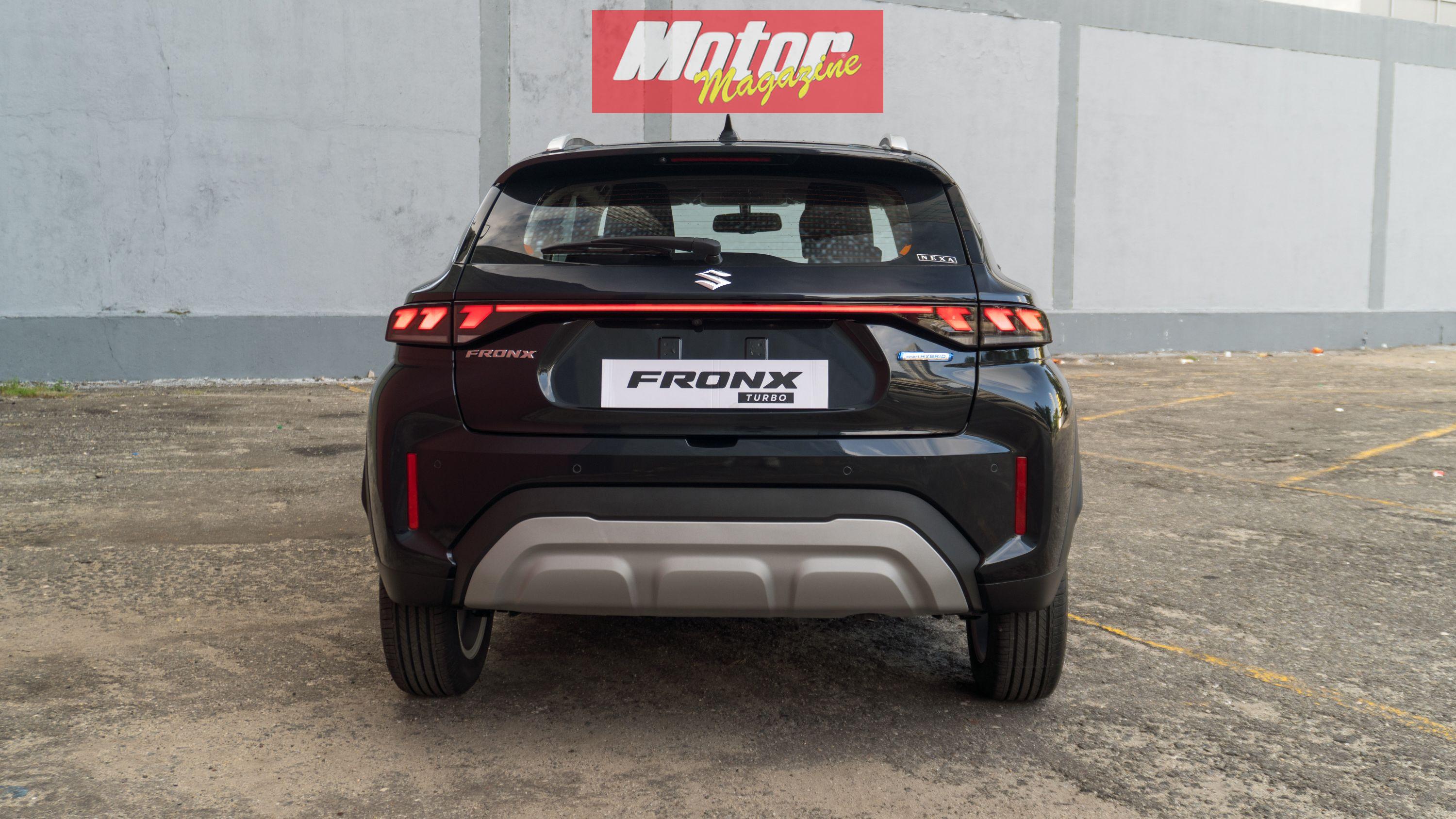
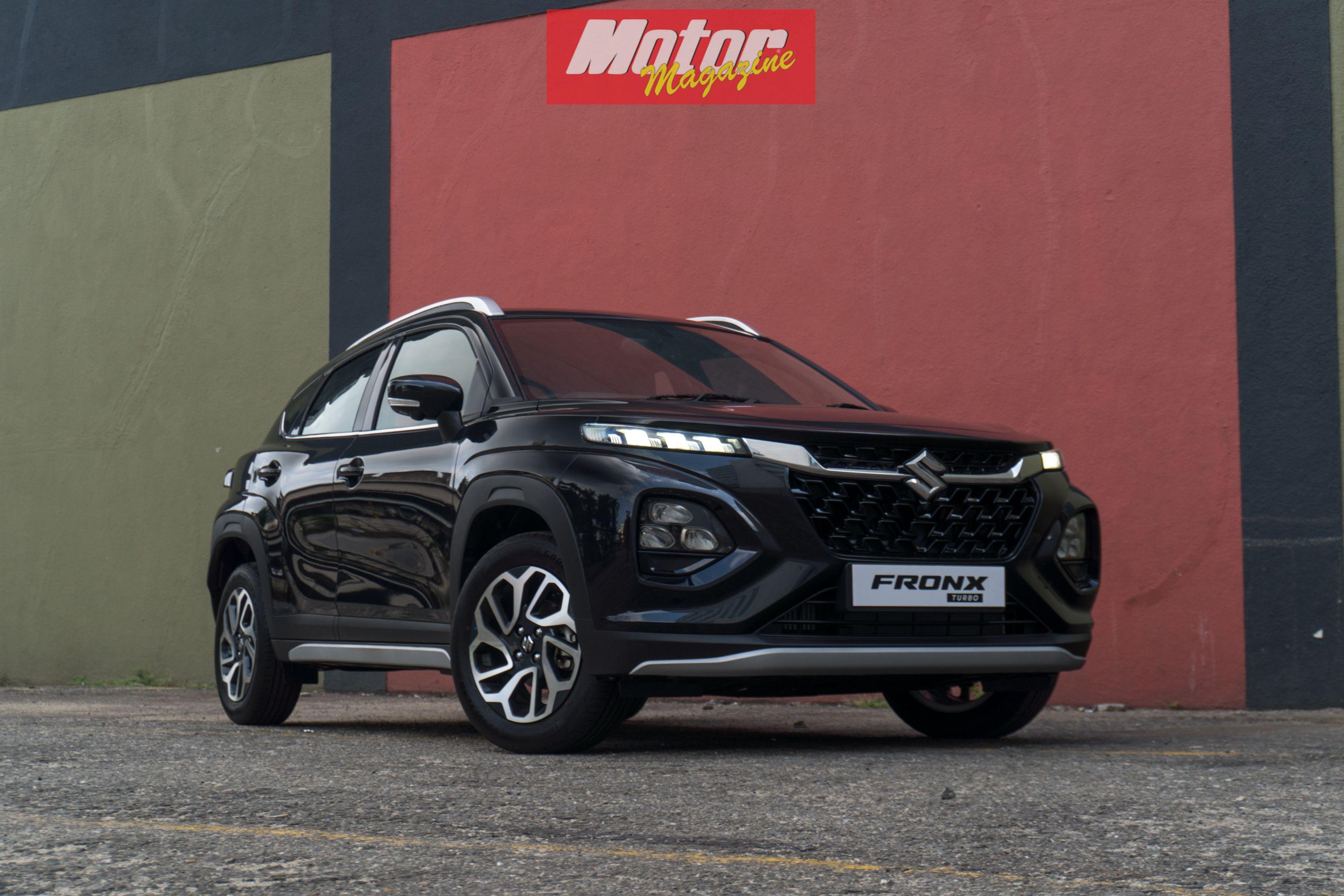
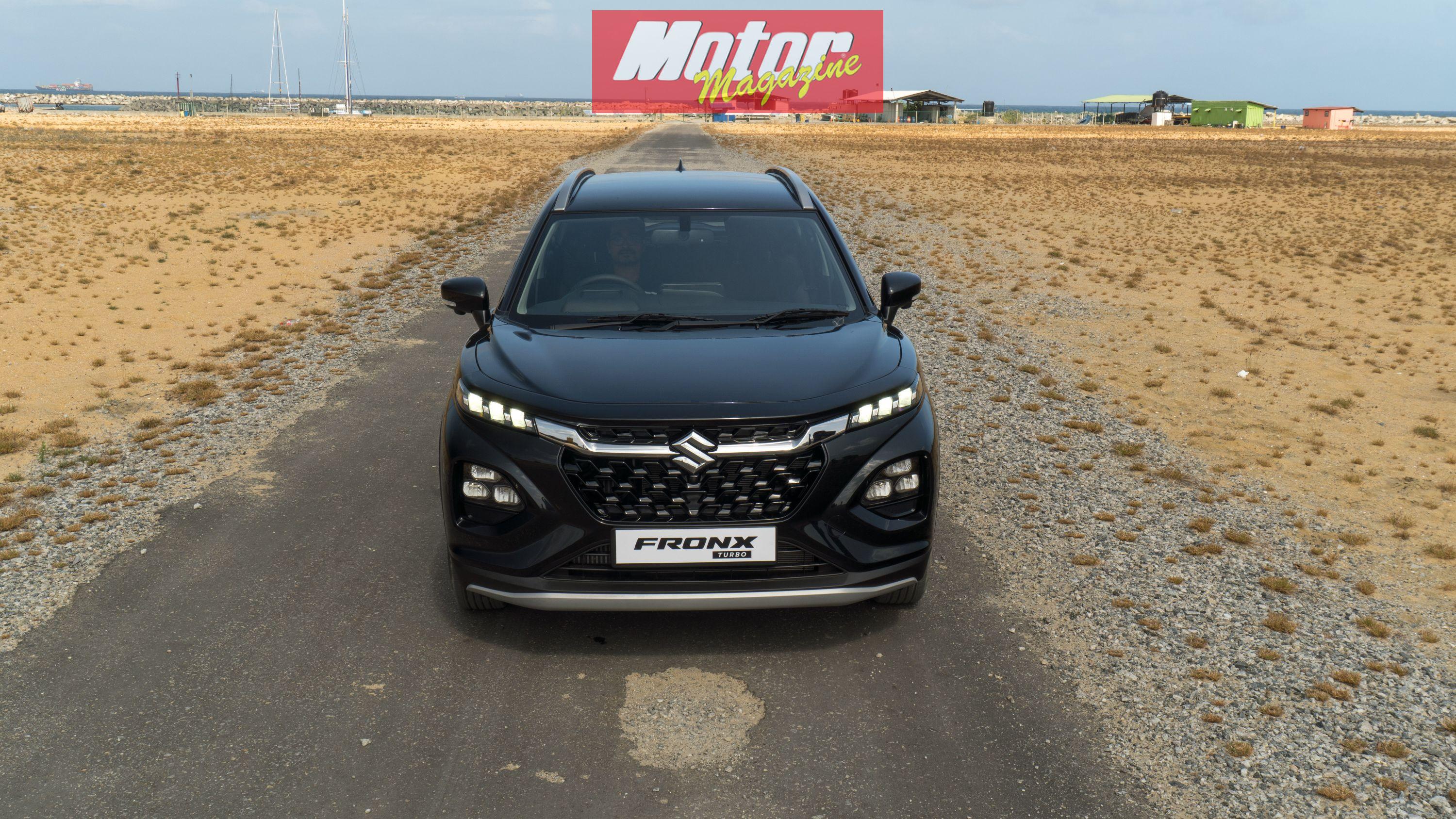
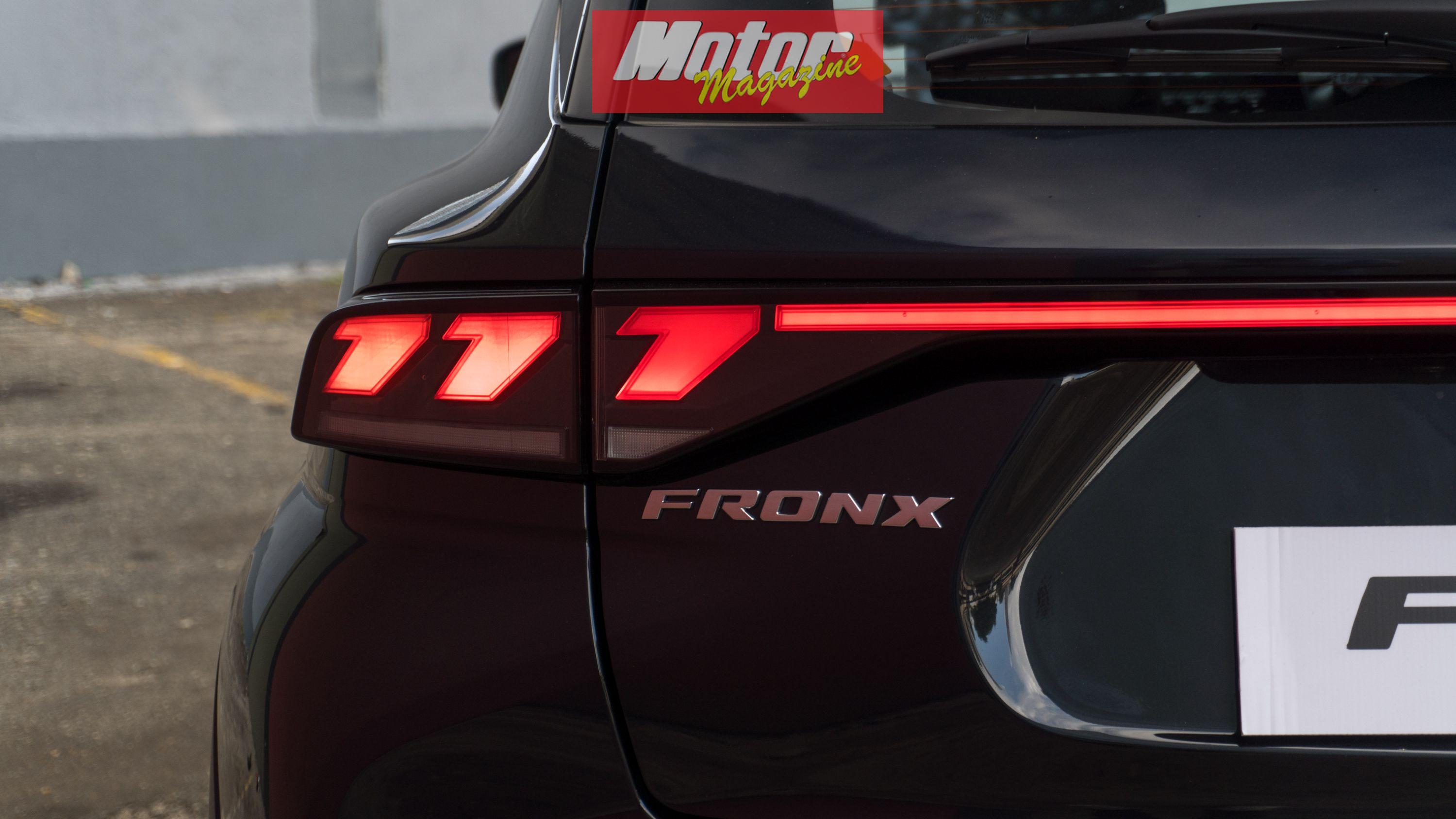
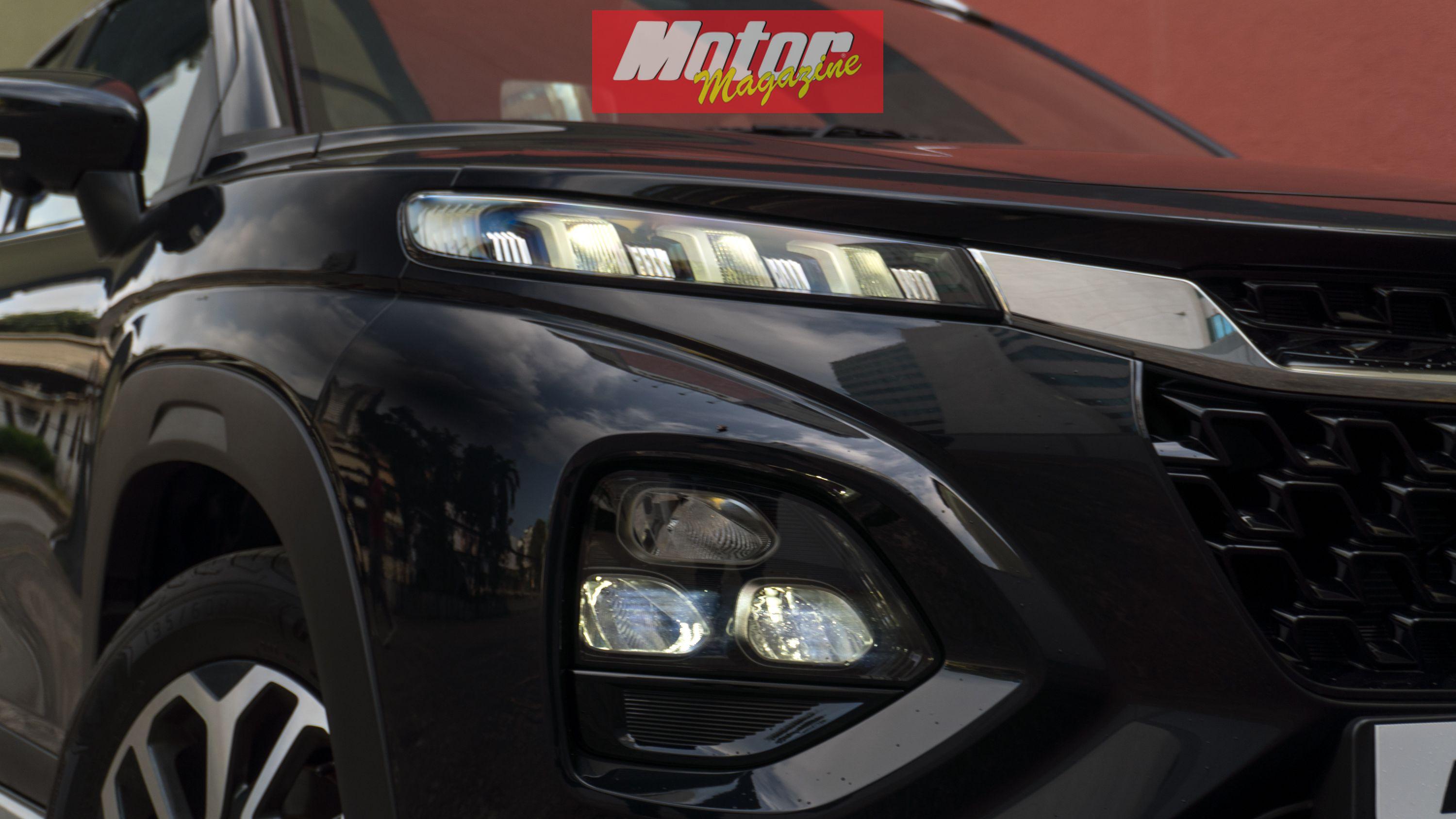
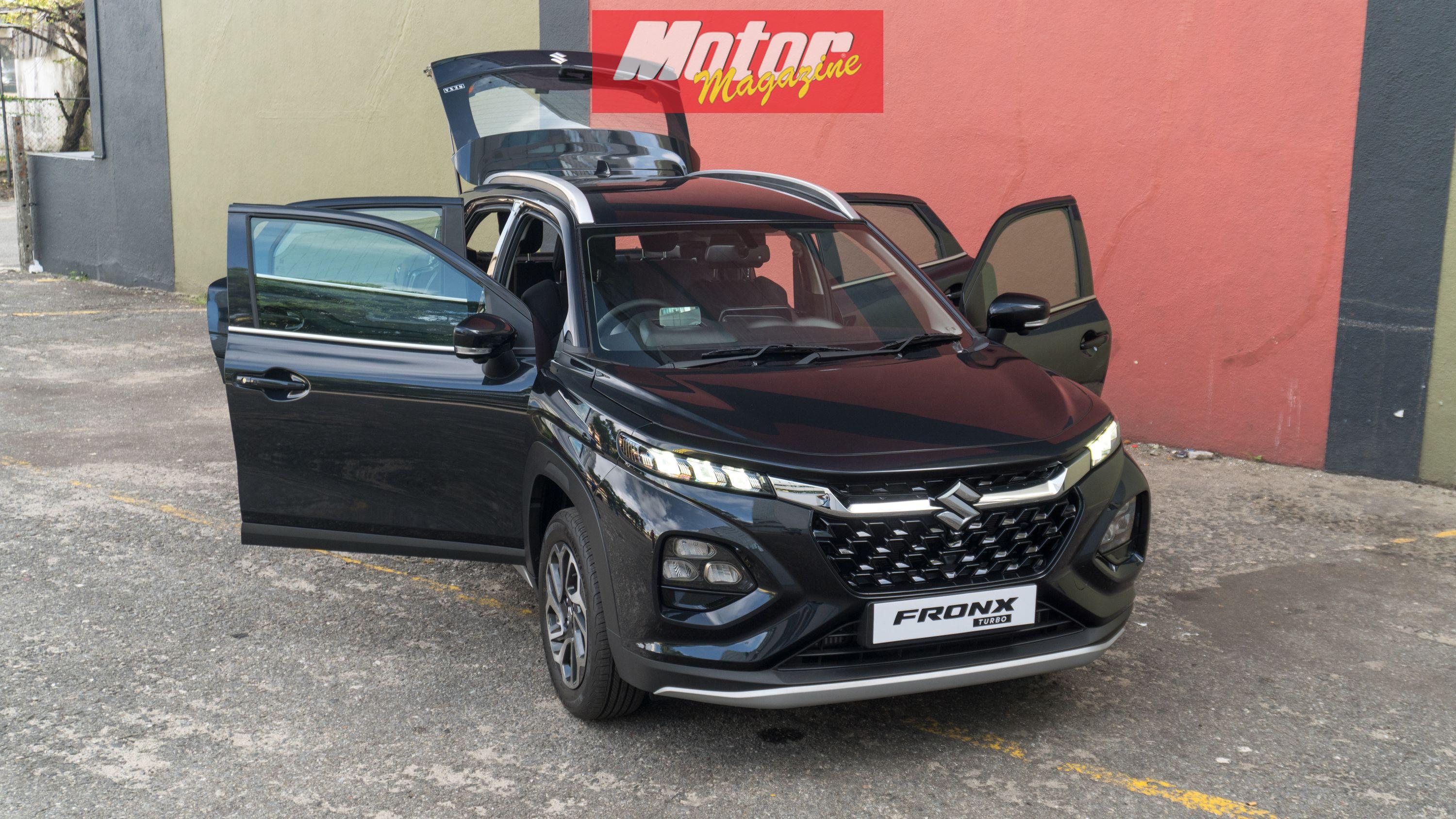
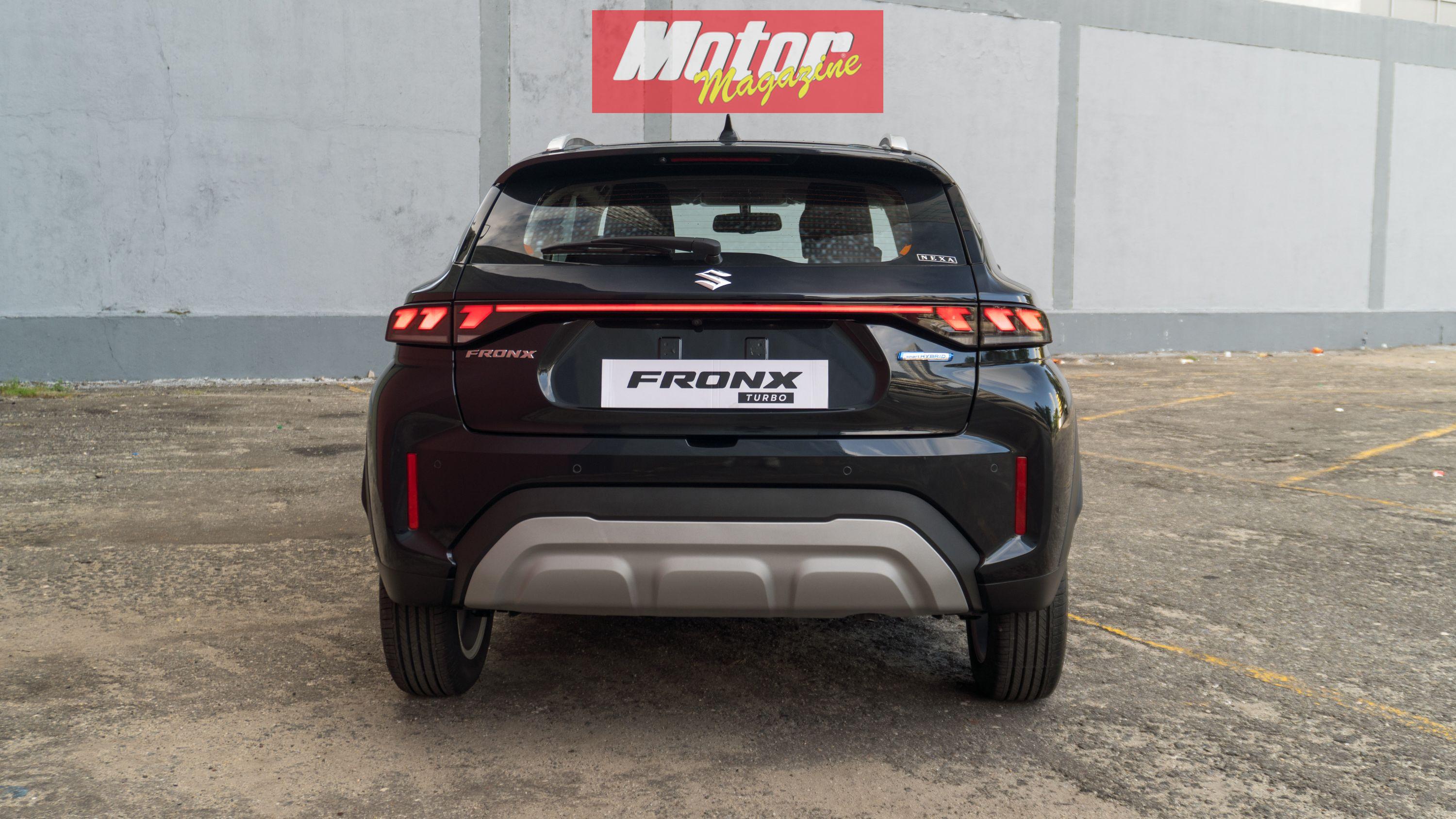
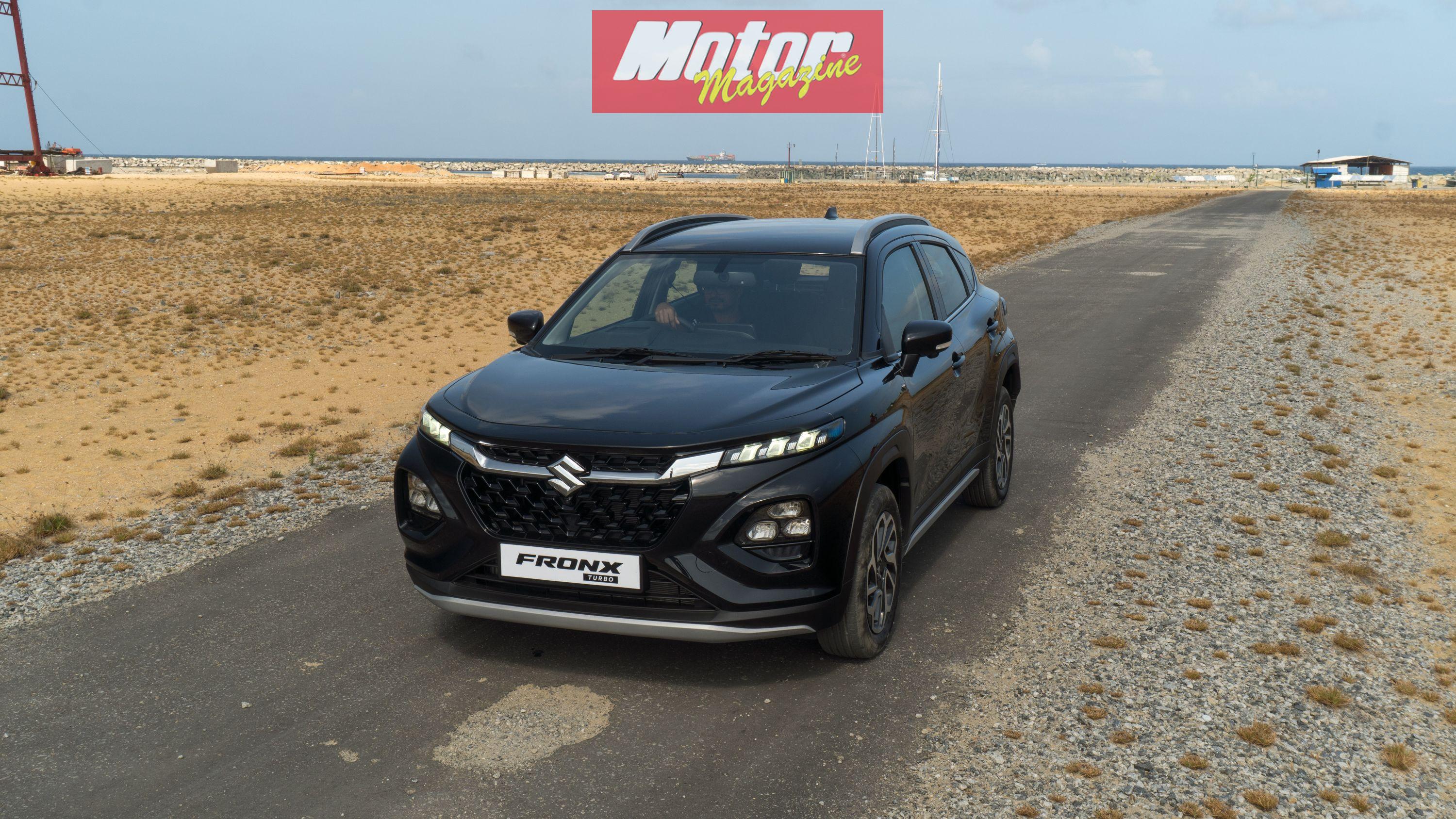
The Fronx has the curious characteristic of looking like an SUV and a car (hatchback) at the same time. When you look at it face-on, that vertical grille, high-set headlamp-esque daytime running lamp set and trio of actual headlamp lenses (LED of course) lower down give it an imposing stance. Then, as you move towards the side profile, its sleeker tapered silhouette tends towards a car-like proposition. At the rear, you’ve got a full-length LED light bar that illuminates when the automatic headlamps are switched on. Another notable feature is the faux rear skid plate in black and grey plastic that is actually quite functional if you’re the sort who can’t reverse properly without bumping into things.
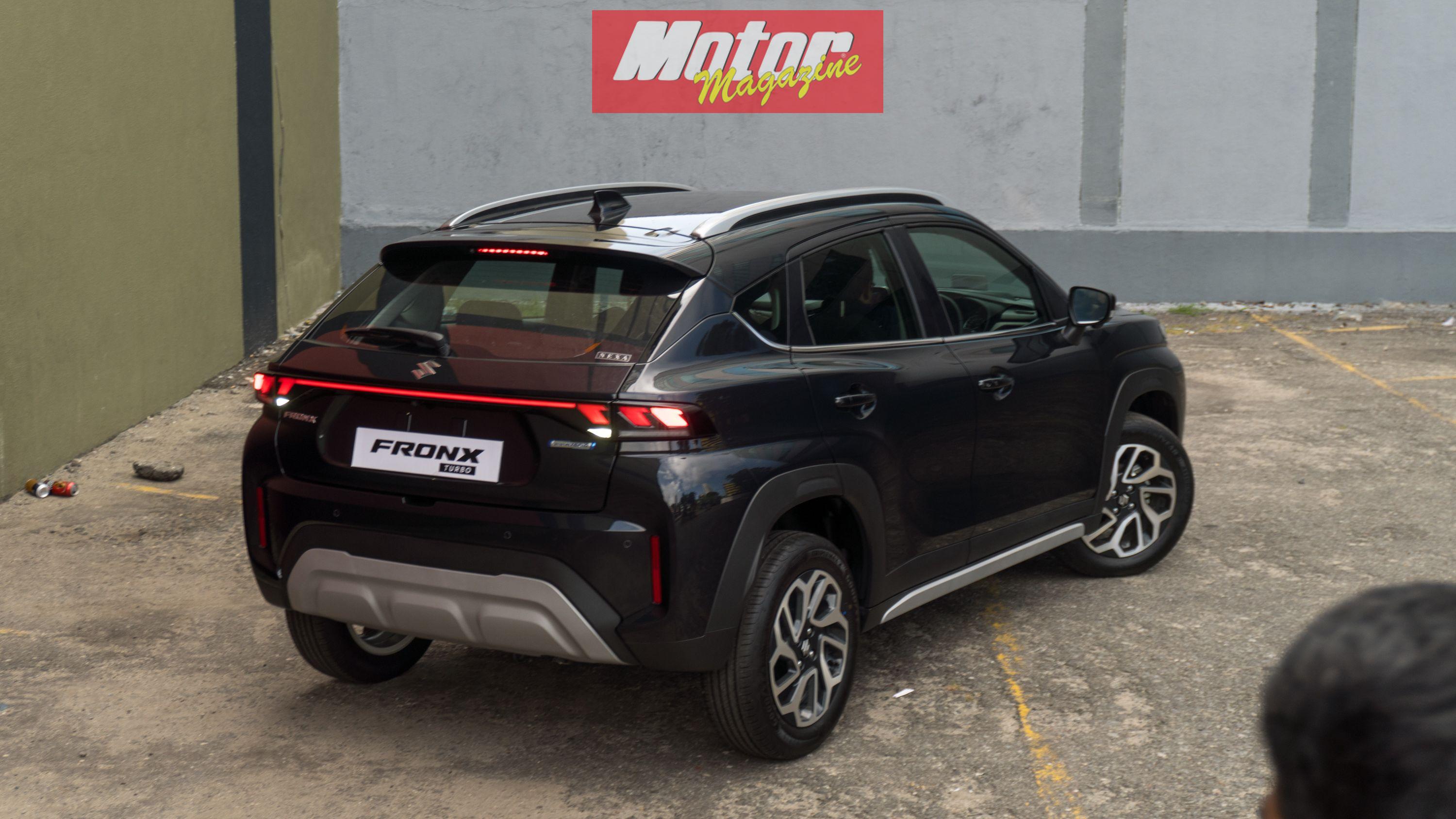
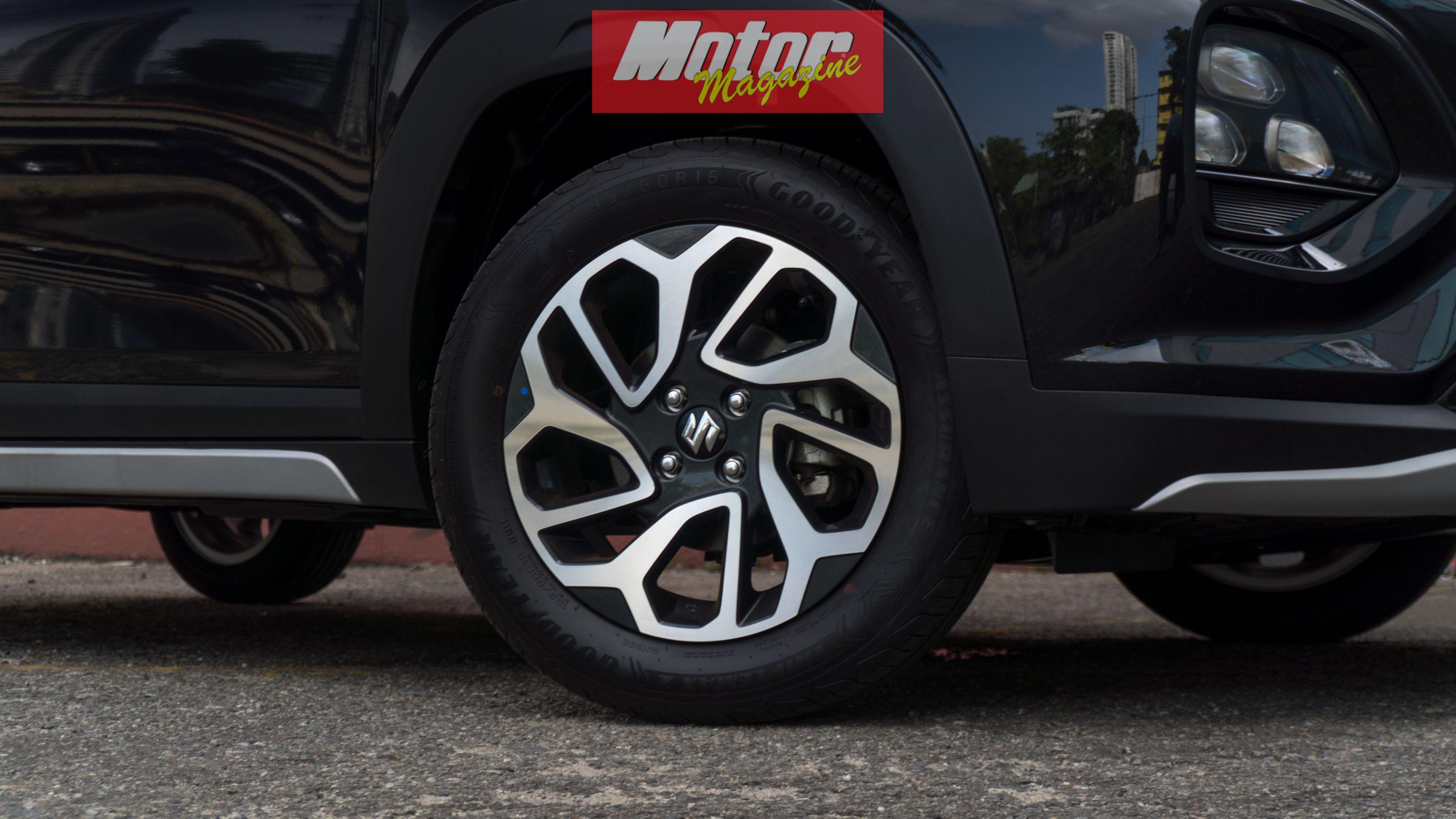
If you think that the Fronx isn’t tall, that’s because it stretches just 1.55 metres off the ground. This means that in addition to your typical SUV buyer, it will also appeal to those who prefer a more car-like shape. Our tester looks smart in its relatively unusual Bluish Black paint job. Four more colours are available, namely Splendid Silver, Grandeur Grey, Celestial Blue and Arctic White. AMW tells me that most buyers have so far been tending towards white and silver. Regardless of colour choice, you get a set of 16-inch precision-cut alloy wheels, shod with 195/60 tires.
Mech & Tech
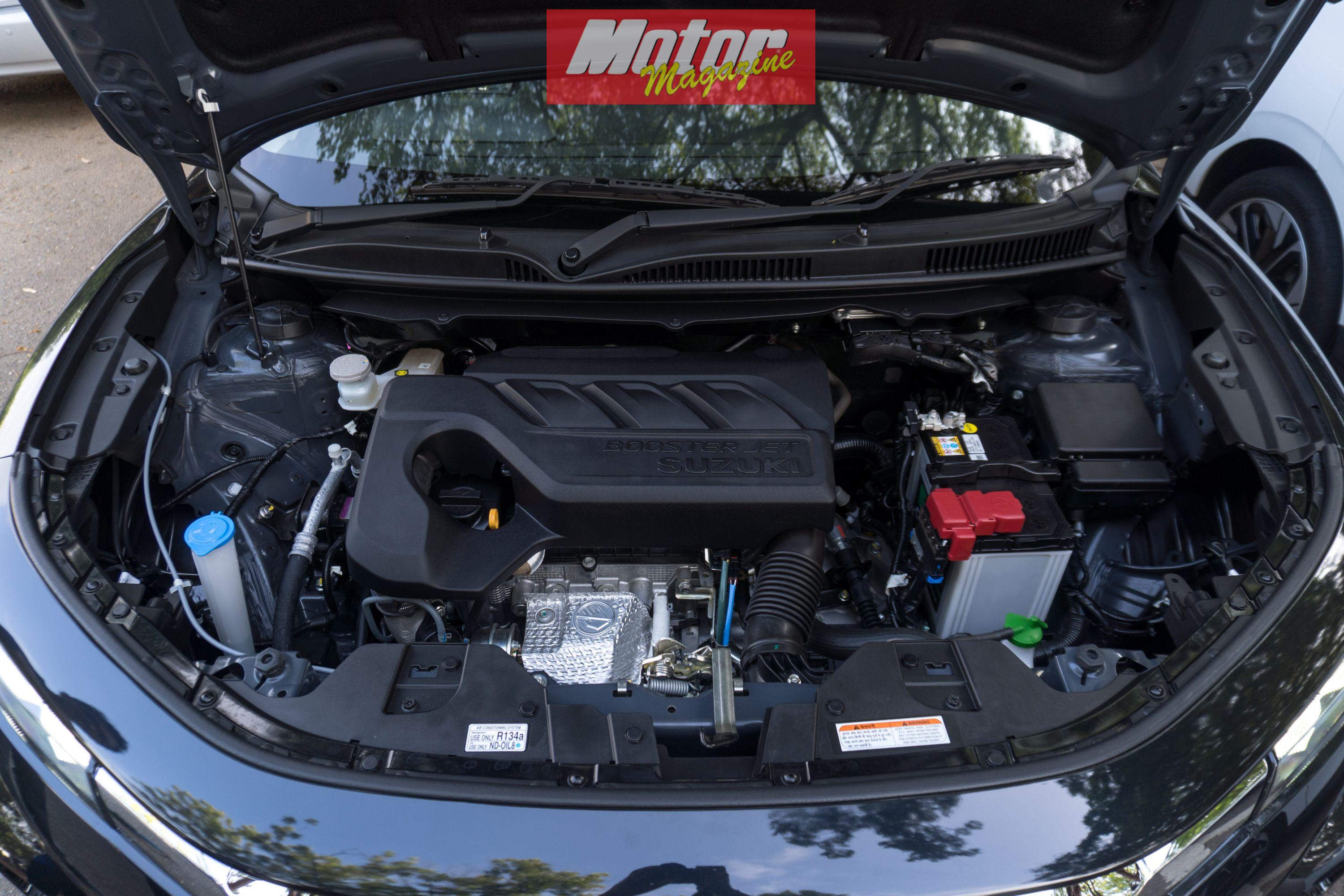
Under the hood of the latest Fronx range can lie a myriad of engines, depending on their market of sale. Sri Lanka gets a 999cc turbo three-cylinder unit. Called the K10 Boosterjet, it’s a pretty well proven power-plant that’s also seen in the Baleno, Swift and Vitara. Rated at 99 horsepower and 147 newton-metres of torque, it’s also backed up by a mild hybrid system. The system uses an integrated starter-generator (ISG) and a small lithium-ion battery pack to provide some assistance when accelerating. The Fronx is primarily offered in front-wheel drive guise for most markets, which is what we get here too. There’s a nice four-wheel drive option, but only Japan gets that. The transmission in Sri Lankan vehicles is a proper 6-speed automatic unit rather than a CVT. Elsewhere, things are pretty standard. Disc brakes at the front are backed up by drums at the rear. The front suspension uses the standard MacPherson Strut system, while the rear has got a torsion beam layout. Oh, and of course, electric power steering.
Driving Impressions
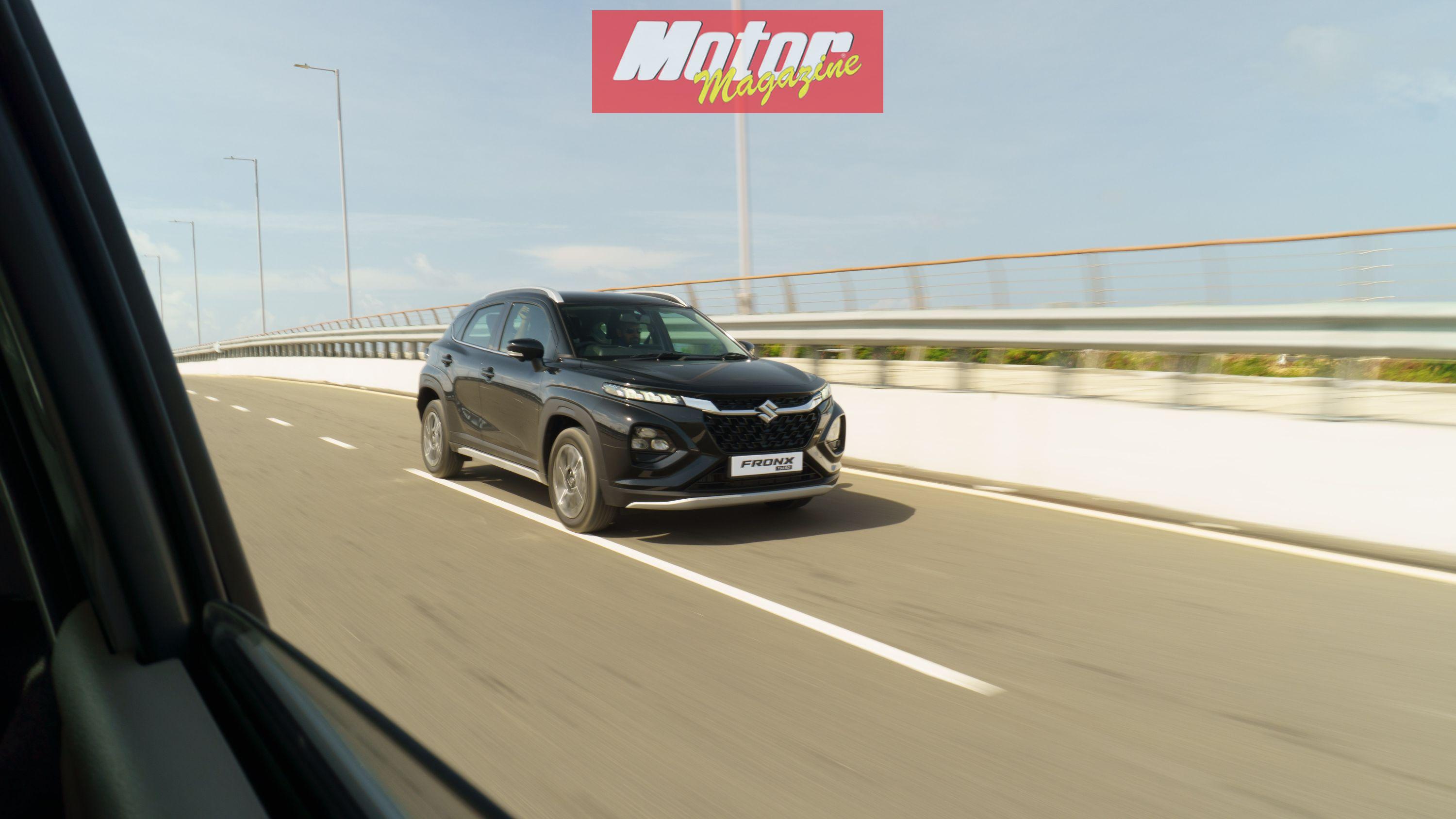
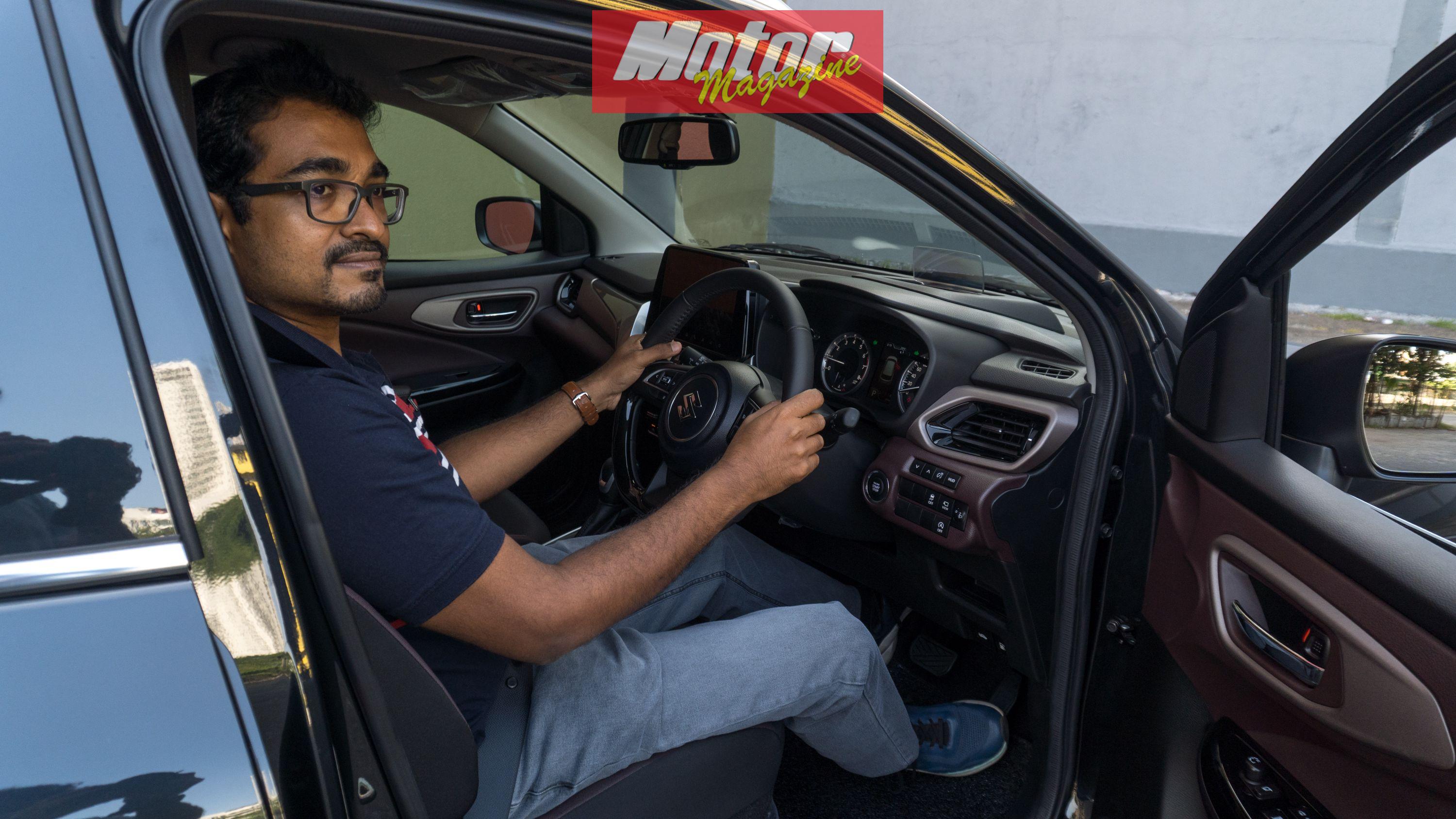
You’ve got a manually adjustable six-way driver seat with height adjustment too, so it’s pretty easy to get comfortable. Hit the start button and the K10C fires up with that unmistakable thrum, albeit pretty hushed. Slide the gear lever into D, release the manual handbrake and you’re off. The gearbox is primarily tuned for efficiency, leaning into the turbo triple’s relatively low-rev torque band when you use a light right foot on it (max torque is available between 2,000 and 4,500rpm). This makes the Fronx very easy to drive smoothly in traffic, aided by its decent visibility and manageable proportions.
What if you want to go fast? Well, for starters there’s no Sport mode to engage. If you want to go fast, you do it the old-fashioned way – bury the throttle pedal. Here, the 6-speed gearbox reacts willingly, smoothly downshifting and letting the engine spin all the way near its 6,200rpm redline. The thrum of the engine becomes noticeable around 4,000rpm but it’s never unrefined. If you crave more control, just flick the gear shifter into M and take control via the steering wheel-mounted paddles. However, don’t expect the whip-crack shift speed of a DCT or, say a ZF 8HP unit. This Aisin unit is more geared towards smoothness. That being said, we did reach the 100km/h mark pretty decently, indicating that the Fronx is a fine long-distance cruiser and not just a city slicker. There’s cruise control too, controlled via steering wheel-mounted switches.
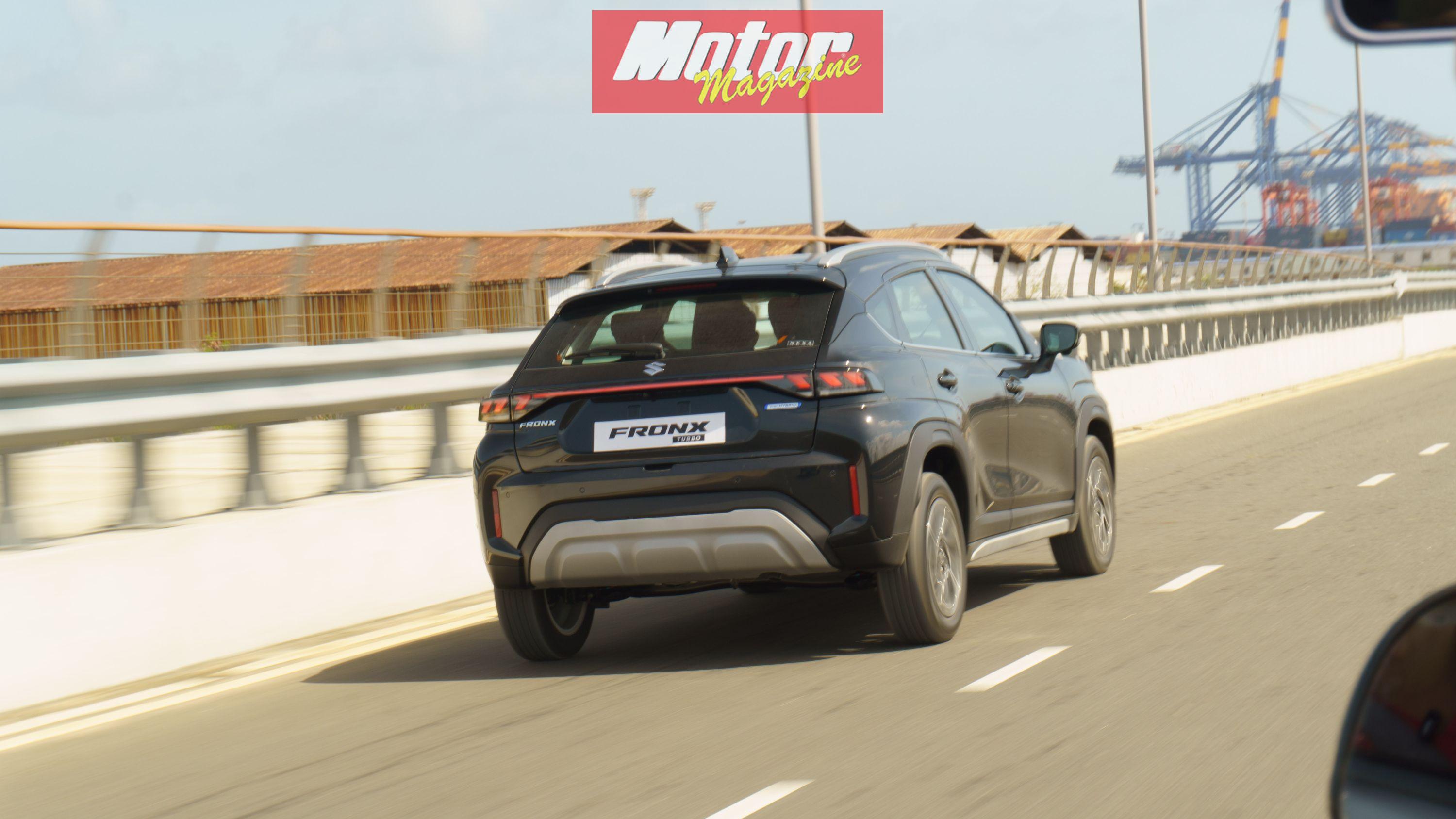
What about ride quality? Well, it’s geared more towards the comfort side of things. The tall-profile tires and relatively tame suspension set-up mean that this isn’t a sporty canyon carver that will attack apexes with tenacity. But then again, that’s not its purpose. Instead, it’s meant to be a calm and cool family cruiser that won’t ruffle feathers. Plus, being an Indian-made vehicle, it’s got that inimitable quality of being able to sail over bad roads at higher speeds than a comparable Far Eastern or European machine could manage without noticeable disturbance to the vehicle’s occupants. As for stopping power, it’s pretty much ample for the Fronx. Brake bite is positive, and pedal action is easy to modulate.
Living with the Fronx
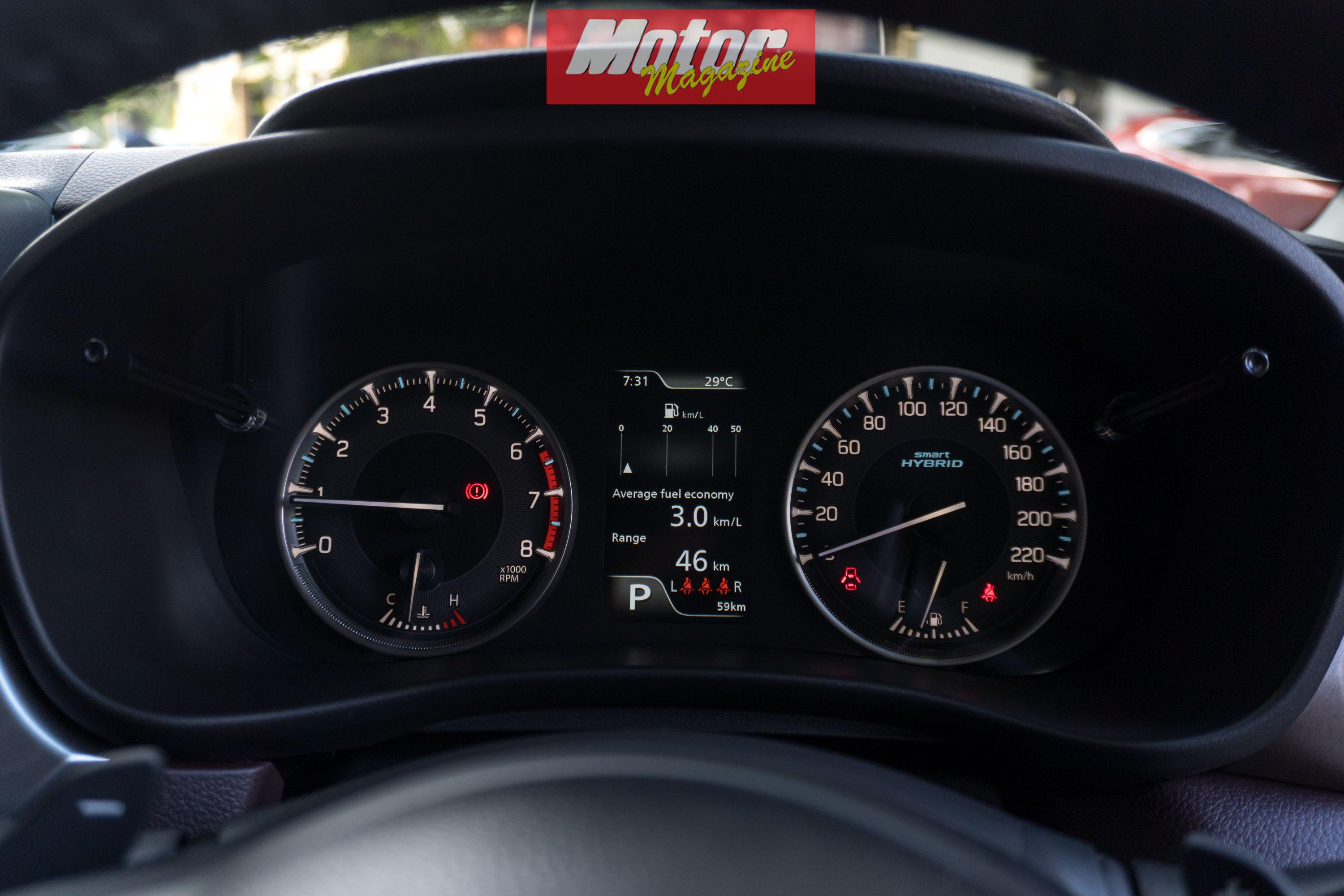
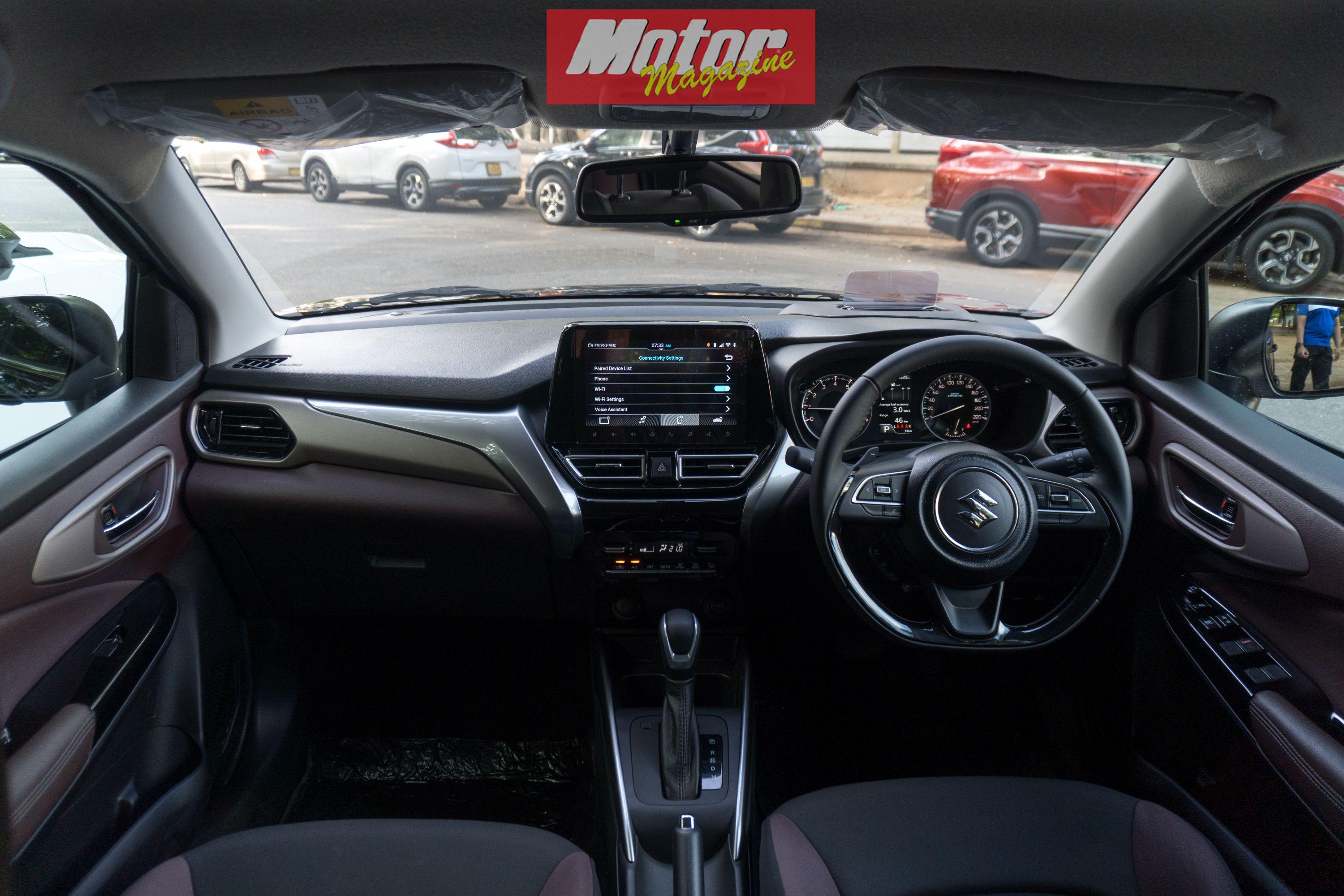
Fabric seats are indeed an interesting choice, given that most vehicles nowadays tend to employ some form and degree of leather to coat their pews. However, the fabric used in the Fronx feels like it’s of a suitably high grade, and most importantly, appears to be hard-wearing. It’s also pretty grippy, which means that people (or objects) won’t slide around under hard cornering. Meanwhile, the interior has got a sort of multi-tone colour theme going on, particularly around the dashboard area, with shades of burgundy and pink-bronze adding some contrast to the main hue of black. Then, you’ll find some shiny chrome and silver bits too. Reading this back, I understand that it sounds a bit gaudy, but a look at our photos will reveal that it’s the polar opposite of that, and works very well indeed. The Alpha spec that we get in Sri Lanka is pretty highly equipped. You’ve got a slick heads-up display that smoothly motors upwards from the dashboard and augments the clear and neat main gauge cluster if desired. The heads-up display offers several display modes, as well as the ability to adjust its angle to best suit the height of the driver. If you don’t want it, of course, you can retract it and rely on the main gauge cluster. Here, you’ve got two large analog dials for speed and engine revs plus two smaller ones for engine coolant temperature and fuel level. Between these dials lies a full-colour multi-information display with some cool modes of its own. In addition to vehicle, trip and fuel economy information, you can also call up a histography of your recent accelerating and braking behaviour, a sort of G-force meter, and even real-time indications of engine power and torque outputs!

A single-zone automatic climate
control system offers that arctic-chilling ability that only Indian-made cars
seem to possess. It’s bolstered by a duo of rear air vents too, ensuring that
everyone on board is kept comfortable in the sweltering heat. Then, there’s a
9-inch touchscreen-controlled infotainment system with Apple CarPlay and
Android Auto. There’s also an onboard voice assistant that is triggered via a
steering wheel button or “Hi Suzuki” keyword functionality. Meanwhile, your
music plays through a 6-speaker sound system with some tuning by Arkamys. I
found the sound quality to be perfectly acceptable, and you’ve got some
equaliser settings to play with too.
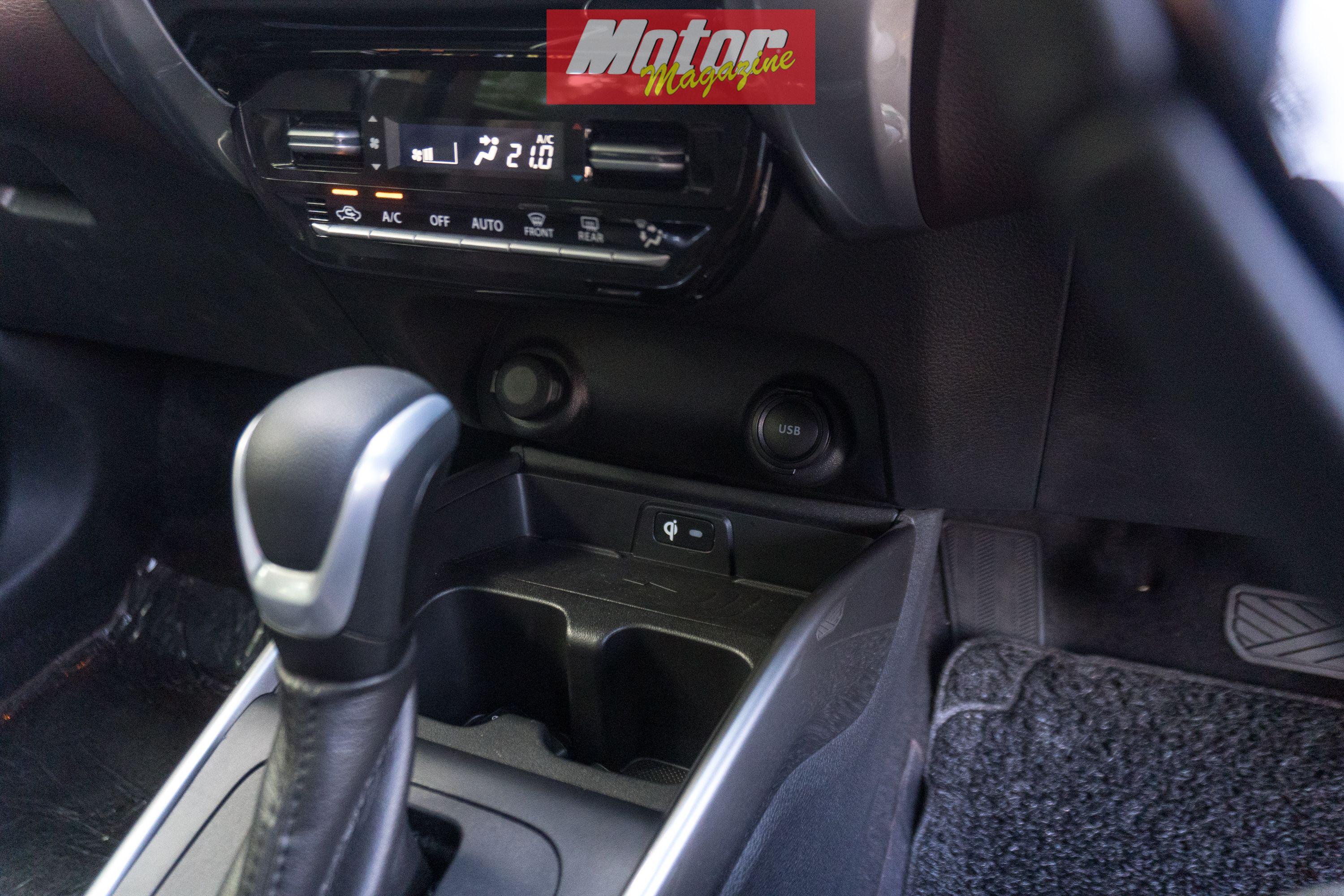
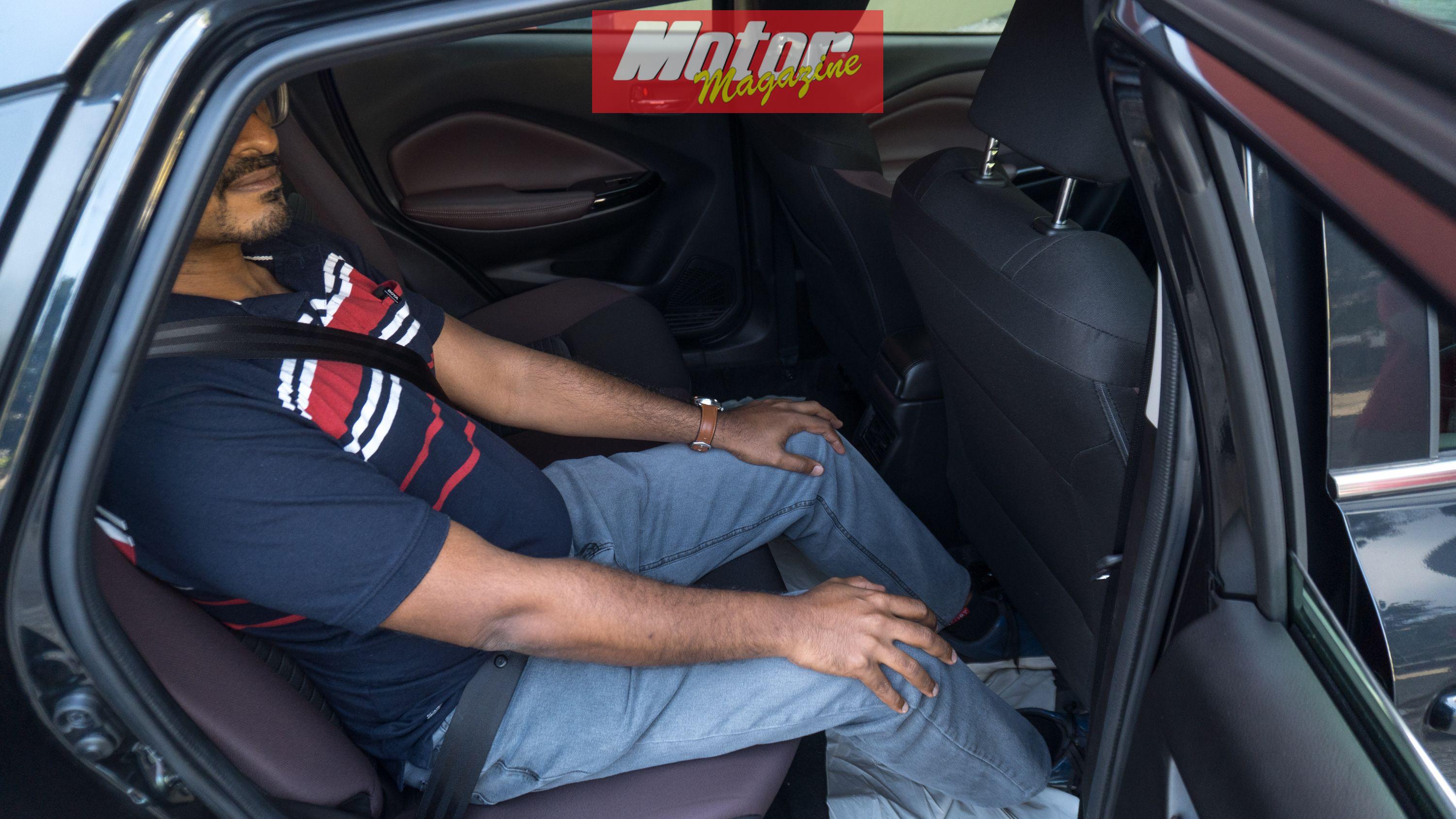
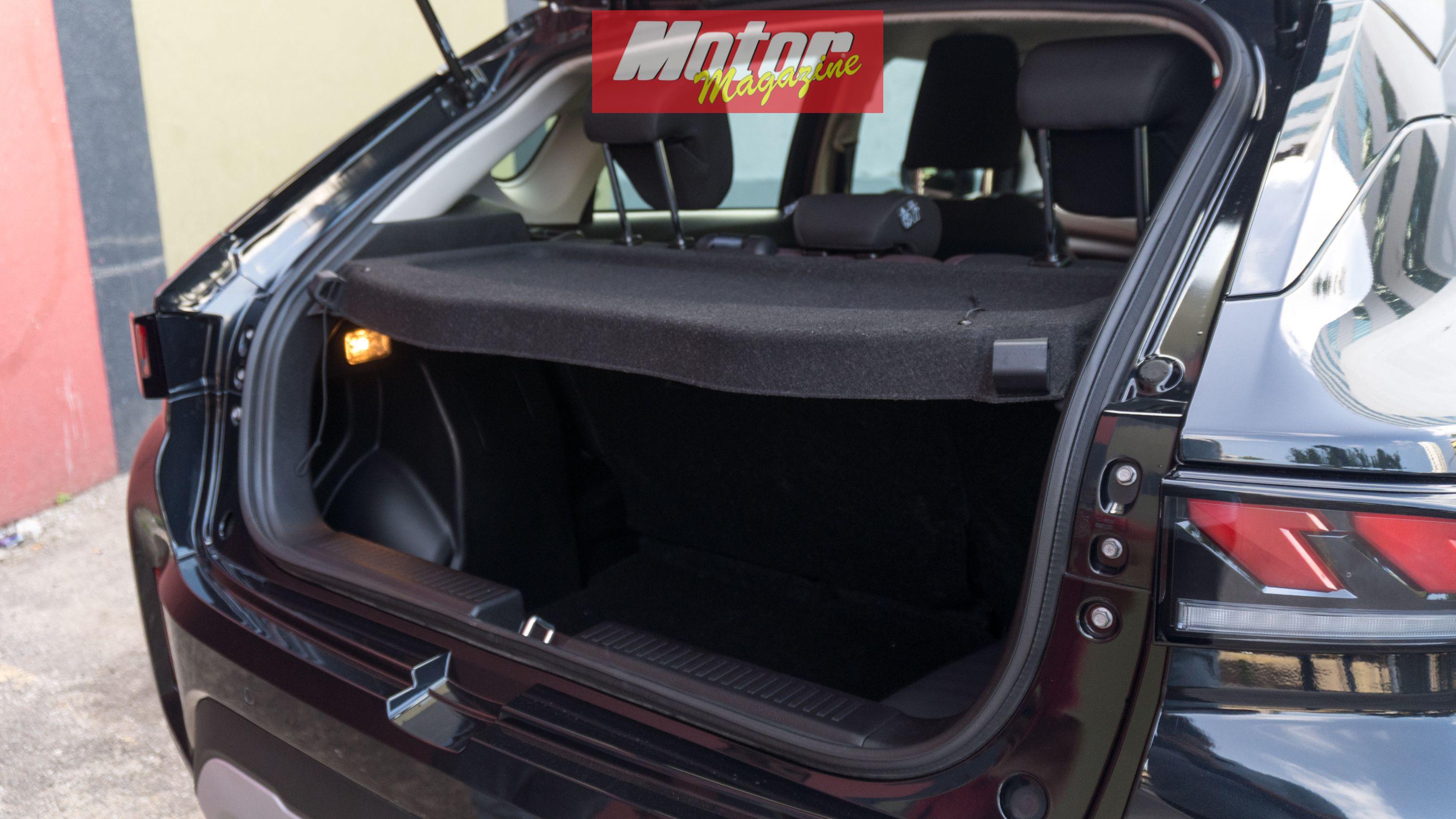
Up front you’ll also find a 12-volt power outlet and a USB-A charging socket, as well as a wireless phone charger. Rear-seat occupants are treated to not one, but two USB charging sockets – a Type-A one, as well as the newer Type-C variant. This is fantastic to see in a car from this segment. Speaking of the rear seat, it’s got enough rear legroom, and the seat cushion height is set for decent thigh support, aiding comfort during longer journeys. However, I noted that if I slightly raised myself off the seat, my hair would brush the headliner. Since I am 5’8” tall, this shows that the sloping design of the car results in a little less headroom, so 6-footers or spiky-haired teenagers will prefer the front seat. The Fronx offers ample storage facilities. You’ve got the usual glove box and there’s a centre console storage compartment between the front seats. The doors have deep pockets and door bins too. Then, there’s the 308-litre boot with a removable cargo cover. The boot has a deep design, and beneath its floor lies a proper, full-size spare wheel! Plus, if you need more storage space, you can split-fold the rear seats. This will give you in excess of 1,000 litres for your cargo.
Safety
The Fronx comes with a comprehensive suite of safety equipment. You’ve got six airbags as standard fitment. Then, there’s a 360-degree camera system with a nifty rotating view as well, which you can switch off if desired. All five seating positions use three-point seat belts, and the car will alert you if anyone hasn’t buckled up (this includes all three rear seat positions). Up to two child seats can be strapped into the rear seat, using the seat belts or provided ISOFIX mounting points. Then, there’s a hill hold assist system, an auto-dimming rear-view mirror, stability control system and security system with immobilizer.
Fuel Economy & Price
The Fronx comes with a 37-litre fuel tank. The brochure tells me that it’s rated at 20.01 kilometres per litre. So is this possible? Throughout our drive, we had three people on board, and kept the air conditioning at 22C. With a light right foot, I was able to see just over 20km/l on the multi-information display when cruising on a level road at 75km/h. Cruising at the city speed limit of 50km/h I saw 13km/l. Of course, when pushing it, I saw mid-single figure digits. So, I guess the average user can expect around 10km/l – of course depending on driving style and traffic conditions. AMW is currently offering the Fronx Alpha AT 1.0L Turbo at 10.25 million as a special price. This is discounted from the usual price of 10.75 million. The warranty is quoted at 3 years / 100,000 kilometres (whichever occurs first).
Final Words
One of the more sensible offerings
at the 10-million-rupee mark (I can’t believe that 10 million is considered
mainstream for a vehicle now!), the Fronx comes with a recognizable badge on
the nose, a regular petrol engine, and an impressive array of tech toys for its
price. Plus, it’s not pretending to be sporty or luxury, instead it rides on a
value proposition of solid, sturdy family motoring.