


In the world of car manufacturing, it usually takes around 30 years for a new brand to reach a point where it can consistently produce reliable, well-sorted cars that compete with the industry giants. Toyota, Hyundai, and even Volkswagen followed this trajectory.
Tata, long known for building trucks and buses, entered the passenger car market much later. Its first attempt came in the late '90s with the Indica, a car that marked India’s first true effort to design and build a homegrown automobile for the masses.
Understanding that commercial vehicle experience alone wouldn't cut it in the competitive world of passenger cars, Ratan Tata approached the Ford Motor Company to explore a technical partnership. Ford reportedly dismissed the proposal, a move that may have seemed minor then, but history would soon deliver a twist.
Ratan Tata, never one to be petty, likely remembered that meeting in 2008 when he walked out of Ford’s Premier Automotive Group boardroom with the keys to the Jaguar Land Rover (JLR) empire in hand.
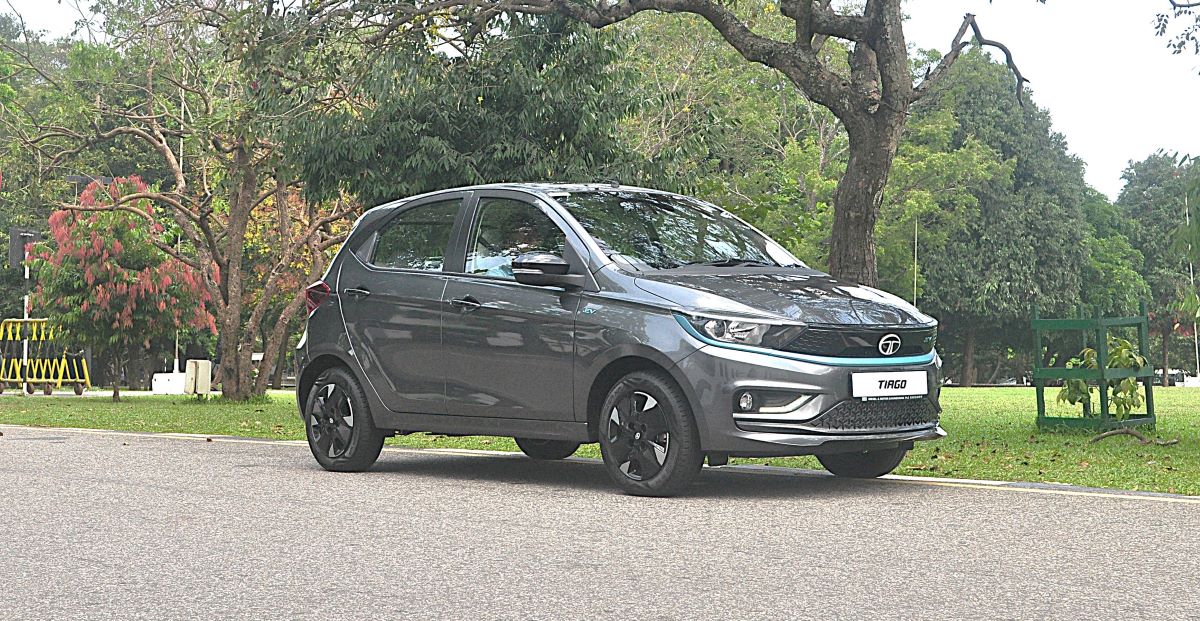
With access to JLR’s engineering and nearly three decades of car-making experience, Tata Motors was poised to rewrite the rules… which brings us to the Tiago EV.
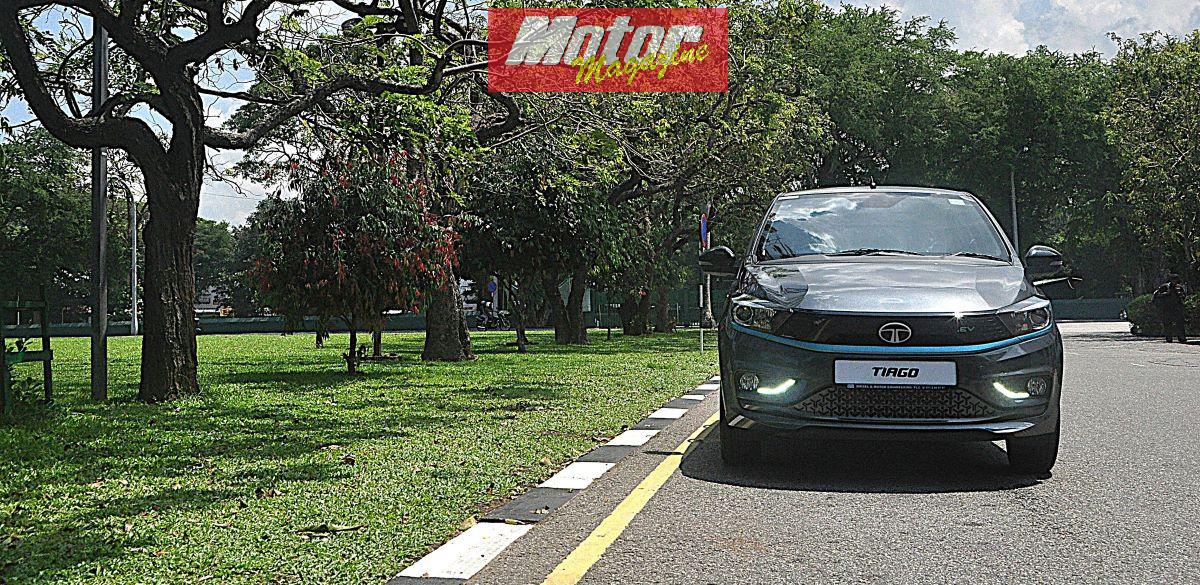
First Impressions
With the Tiago now replacing the Tata Bolt we
briefly saw on Sri Lankan roads before the import ban and the Indica name
firmly consigned to the history books, the Tiago EV steps up as Tata’s new
entry-level model, at least for the Sri Lankan market.
The competition? Think of the Hyundai Grand i10, Suzuki Celerio, and perhaps at this price point, the Mahindra KUV100, though the Tiago EV’s features and powertrain set it apart in some key ways.
In this segment, where features are typically sparse and expectations modest, it’s easy to wrap up a review in half the time. But the Tiago EV complicates things, albeit in a good way. It brings a surprisingly grown-up, big-car-like personality to the table, wrapped in a compact, city-friendly package.
Exterior
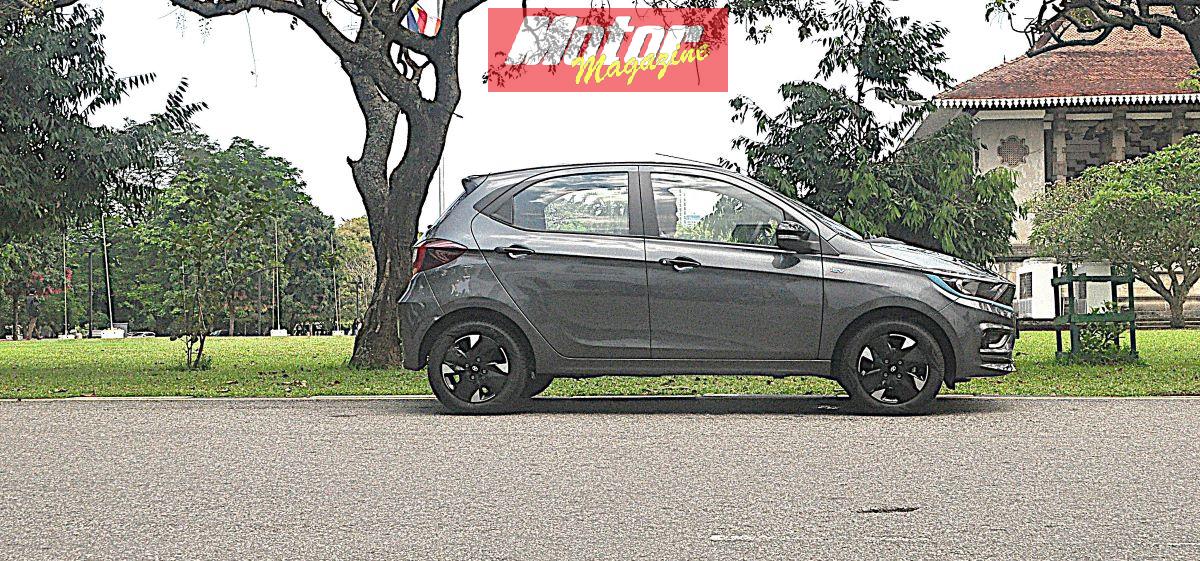
Among Tata’s new-gen lineup, the Tiago EV
plays the more reserved sibling. Its shark-nose front, a design flourish that’s
becoming rare these days, gives this compact hatch a surprisingly confident
stance.
Viewed side-on, the silhouette echoes a slightly shrunken Mazda2, which, all things considered, is no bad thing. Like most Indian-market cars, the Tiago EV rides high on its suspension, and the small wheels can look a bit lost in the arches. But considering that the battery pack sits beneath the rear floor, that extra ground clearance feels more like a reassurance than a compromise.
Interior
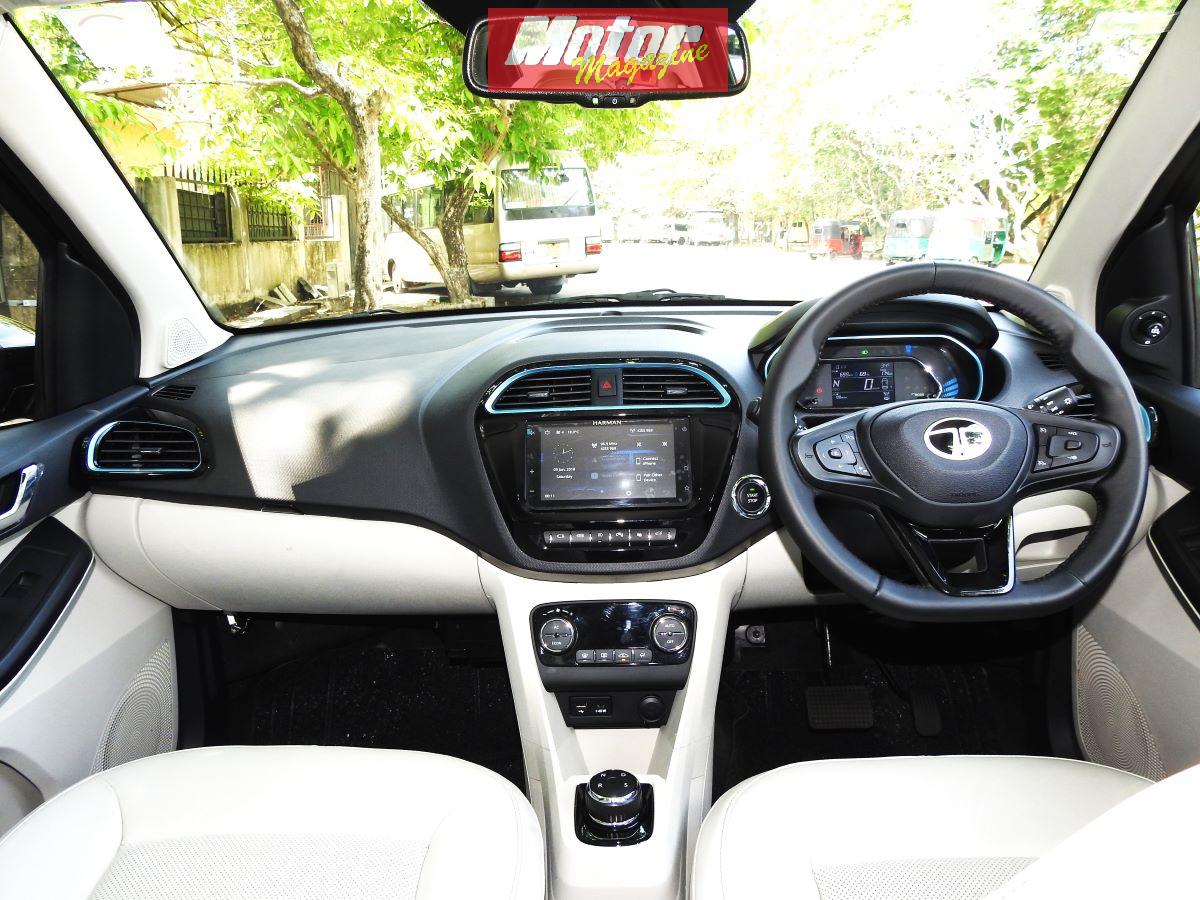
Step inside, and you're welcomed by a light,
inviting cabin, something increasingly rare in this segment. The cream
leatherette seats with contrasting blue stitching instantly lift the ambience,
offering a surprisingly upmarket feel for this price point. Space is generous
and, combined with the airy design, gives a sense of sitting in something a
class above.
The steering wheel is also wrapped in soft-touch leatherette, complete with quality stitching that furthers the premium impression. Electric blue accents across the dash bring some much-needed pizzazz to what is otherwise a slightly dated design, but it all works together surprisingly well.
The tactile quality of the controls and even the subtle scent inside evoke a car with much loftier aspirations. The rotary gear selector, while not as flashy as the one in the Tata Punch, adds its own distinctive character. Overall, the Tiago EV’s interior is a genuinely pleasant place to spend time.
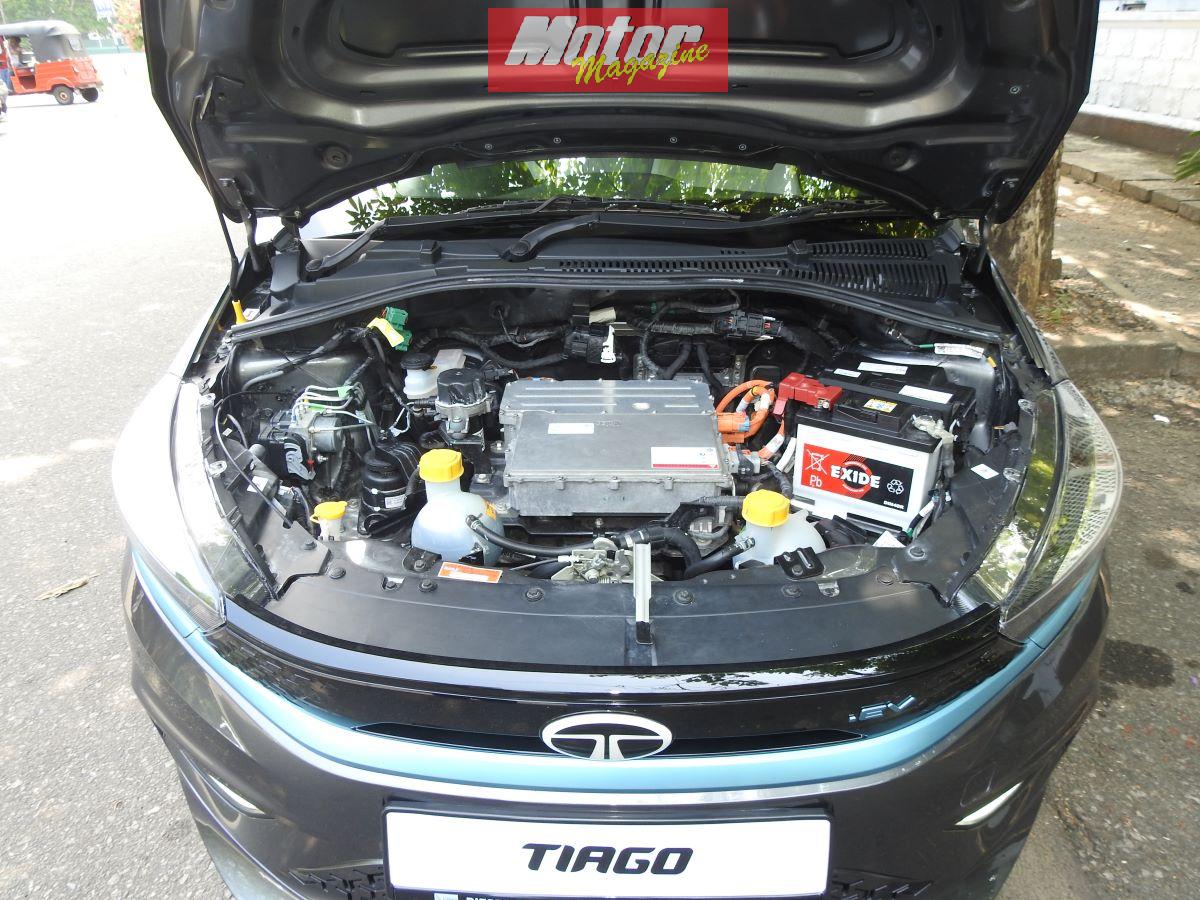
Performance Handling and Range
At first, driving the Tiago EV felt
uneventful in the best way possible. Its smooth, linear power delivery is
reminiscent of a well-engineered Japanese hatchback, perhaps even better than
some. It’s refined, calm, and surprisingly effortless. Acceleration in standard
mode is adequate, with enough torque to keep things moving at a brisk pace
around town.
That calm demeanour however, takes a sharp turn once you switch to Sport mode. The character of the car transforms instantly. Torque delivery becomes immediate and assertive, and overtaking suddenly feels almost too easy. With 114 Nm available from 0 rpm, the performance is comparable to that of a 1.6-litre petrol engine. It’s not aggressive or dramatic, but having this level of punch in a small Tata hatchback is a pleasantly surprising experience.
Regenerative braking is managed through dash-mounted buttons, offering three levels. The strongest setting comes tantalisingly close to one-pedal driving, useful in urban traffic and steep downhill stretches.
Despite its tall ride height, the Tiago handles corners with confidence. Body roll is well-controlled, and during high-speed lane changes, it moved with a composure rarely associated with older Indian-made cars. It’s evident that Tata has learnt a lot, not just from its own evolution but perhaps also from its time with Jaguar Land Rover.
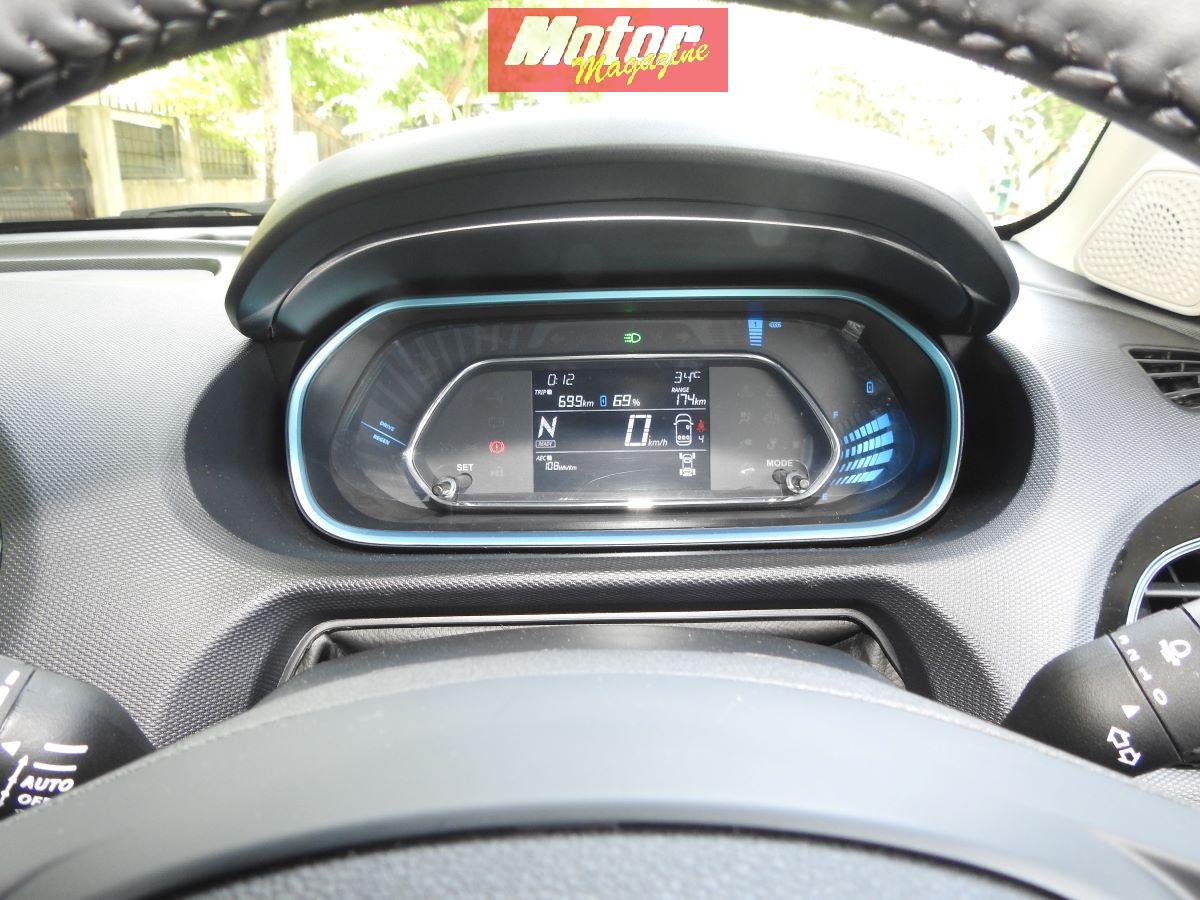
Comfort
The seats, though simple and flat in design,
were quite supportive. In the back, the Tiago EV makes clever use of its
compact footprint. Rear legroom was reasonable for a car in this class, and the
low window line combined with ample shoulder room creates an airy, open feel - something
that’s becoming increasingly rare in modern cars with rising beltlines and
sloping roofs.
The air-conditioning system deserves special mention. Clearly engineered with the South Asian climate in mind, it had no trouble cooling down the cabin, even after the car had been baking in the sun. The light-coloured interior certainly helped reduce heat absorption in this instance.
If we had to nitpick, the absence of a front centre armrest stood out, especially considering the generous equipment list elsewhere in the cabin. It’s not a deal-breaker, but its inclusion would have completed the package.
Gadgets
The latest generation of Tata vehicles has been
quietly blurring the line between budget-friendly and premium, and the Tiago EV
is no exception. Despite being the smallest and most affordable model in Tata’s
electric lineup, it punches well above its weight when it comes to equipment.
An auto-dimming rear-view mirror is perhaps the first clue that the old image
of barebones Tata cars is long gone. This is a very different proposition.
Automatic headlights, rain-sensing wipers, and even a cooled glovebox, features once reserved for premium sedans, are now standard fare in upper trims of this compact hatch. The Tiago even borrows a page from Volvo’s book with rear occupant detection, alerting the driver if a passenger has unbuckled a seatbelt, which is particularly handy when you have cheeky children in the back.
Beyond these unexpected luxuries, the Tiago also comes equipped with climate control, a rear parking camera with dynamic guidelines, and multiple USB ports and power outlets spread throughout the cabin.
Sure, it doesn’t offer adaptive cruise control or an electronic parking brake, but in terms of feature count and thoughtful tech, the Tiago EV is impressively uncompromised.
Practicality and Range
The Tiago offers ample storage space in and
around the cabin, featuring cavernous door pockets, a relatively large
glovebox, and convenient trays around the centre console. The boot is spacious
and has a high floor, which makes unloading easier. However, the rear seatback
folds in a single piece, forcing owners to choose between accommodating larger
cargo or retaining a rear passenger or two. Another drawback is the rear parcel
shelf, which isn't tethered to the boot lid, requiring users to manually lift
it when loading or unloading bulkier items.
The Tiago EV comes with two battery options: 19 kWh and 24 kWh. Our test car had the larger 24 kWh battery, which delivered an estimated range of around 200 km per charge - significantly lower than the 295 km figure quoted in the Indian brochure. That said, 200 km is roughly equivalent to the distance a typical Sri Lankan family might travel before taking a few hours’ break, providing a convenient window to top up the relatively small battery.
Warranty and Aftersales
DIMO offers a comprehensive warranty package
for the Tiago EV: three years or 120,000 km for the entire vehicle and eight
years or 160,000 km for the battery and motor. These terms are among the best
in the industry for a car in this size and price category. For those
considering an EV but concerned about the longevity of the propulsion
components, this should offer significant peace of mind. The liquid-cooled
battery system further enhances durability, ensuring reliable performance even
beyond the warranty period.
To reinforce confidence, the Tiago is also supported by DIMO’s 24-hour roadside assistance regardless of age and a network of dedicated Tata workshops across the island. Combined with the above-average warranty coverage, this strong aftersales support should help put to rest any lingering scepticism around Tata ownership.
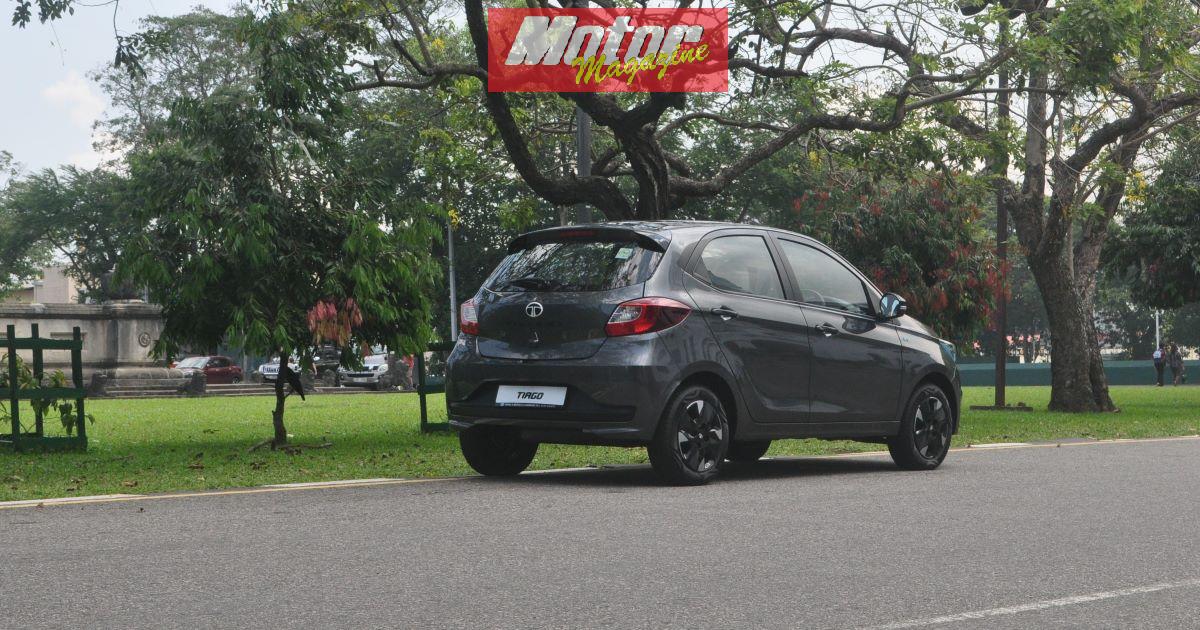
Verdict
The Tiago EV represents the latest evolution
of Tata’s pioneering entry into the passenger car market. Shedding its spartan
origins, the Tiago has matured into a well-rounded package that now offers
class-leading features, and in the case of this electric iteration, impressive
performance and refinement as well.
While the interior design may feel slightly dated compared to its Japanese rivals, it compensates with an airy, inviting cabin, light-coloured materials, and a suite of upmarket features rarely seen in this segment. Build quality is solid, and on the road, the Tiago EV feels planted and reassuring, with a surprising turn of pace for a compact city car.
Backed by DIMO’s islandwide support network, strong warranty coverage, and 24-hour roadside assistance, the Tiago EV emerges as a practical, well-supported, and future-ready choice for Sri Lankan families considering their first electric vehicle.