



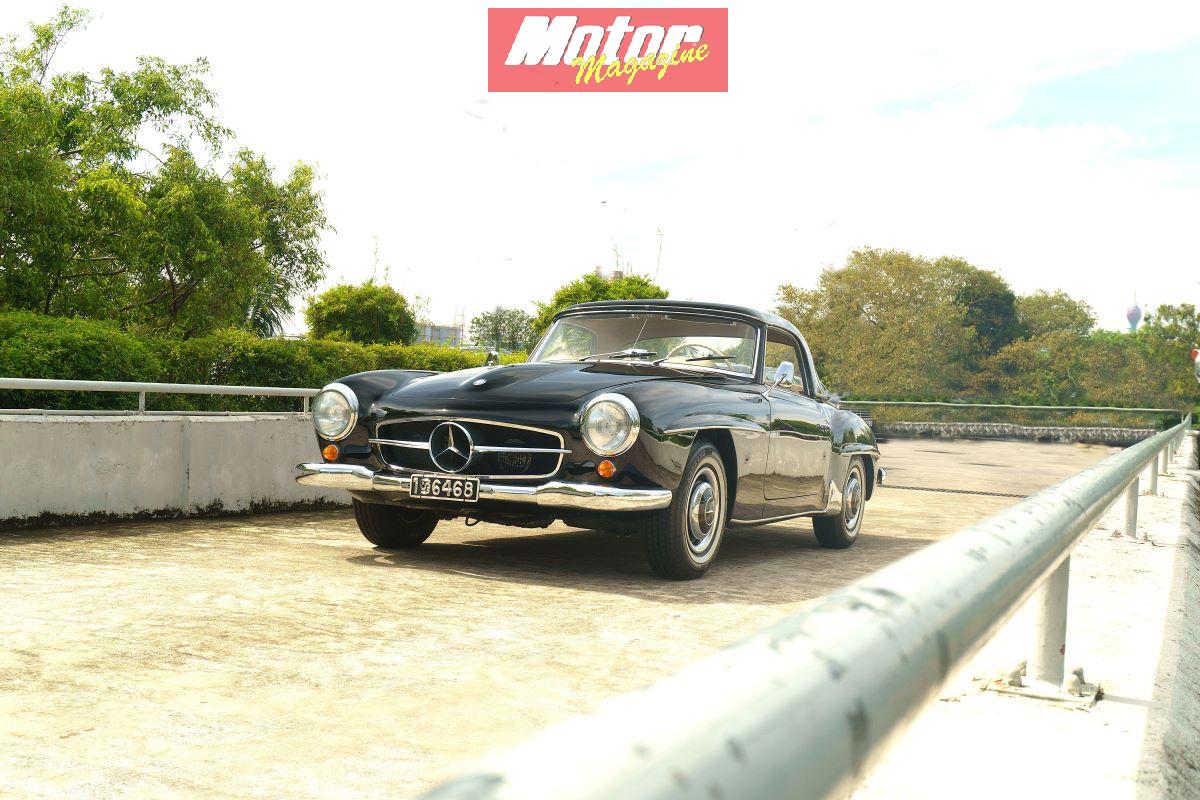
Grace Kelly. Frank Sinatra. Mercedes Benz 190 SL. Names that go together like tuxedos and martinis. Few cars this side of a hand built Italian thoroughbred capture that same star studded, top down, French Riviera in summer allure as the Mercedes Benz 190 SL.
Some call it the prettiest Mercedes ever made. Others dismiss it as too slow to wear the coveted SL badge. But that latter sentiment does the car a disservice once you understand the story behind its creation.
The birth of the 190 SL, and with it, the long line of SL roadsters we know today, owes itself to two things: Mercedes Benz’s postwar return to motor racing, and the remarkable powers of persuasion of one man, Max Hoffman.
The year was the early 1950s. The world was rebuilding. Mercedes was rising from the ruins of World War II, preparing to return to the racetrack. Their new endurance racer, the W194, was taking victories across Europe and the Americas. Meanwhile, Max Hoffman, an Austrian born car salesman turned New York importer, saw an opportunity. He recognized that Mercedes could use a road going version of the W194 as a halo model to capture the imagination and also wallets of wealthy Americans.
Hoffman travelled to Stuttgart to pitch his idea. If Mercedes could build a civilized version of the racer, fast, exotic, but usable every day, he claimed he could sell at least 1,000 of them in the United States.
The result was the 300 SL Gullwing, often regarded as the world’s first supercar. It retained the spaceframe chassis of the W194 for lightness and rigidity, which necessitated those now iconic upward hinged doors. It also introduced mechanical fuel injection and a swing axle rear suspension, making it not only faster but more advanced than immediate rivals like the Ferrari 250 MM.
But Hoffman knew even the 300 SL, as spectacular as it was, was too uncompromising and too expensive for the average sports car buyer. So, he pushed Mercedes to create a second model; something smaller, softer, and more attainable, a car that captured the same elegance and presence but in a much more usable package.
Remarkably, Stuttgart agreed. For the second car, Mercedes engineers turned to their new 180 Ponton saloon. They shortened its floorpan, fitted the company’s first overhead cam four cylinder engine, and clothed it in bodywork reminiscent of the 300 SL, complete with the same swing axle type rear suspension borrowed from the Ponton.
And thus, the 190 SL (W121) was born, a car that brought Mercedes sophistication and Hollywood glamour to a new kind of customer.
When the Mercedes Benz 190 SL made its public debut at the 1954 New York Motor Show, it stole the spotlight instantly. To say the reception was immense is an understatement. Priced at USD 5,500, just over half the cost of its big brother, the 300 SL, it struck the perfect balance between glamour and attainability, eventually outselling the Gullwing by almost twenty to one.
Engineering Grace
At its heart was a brand new engine: the M121, named after its debut car the 190 SL’s internal model code, W121, as per Mercedes Benz tradition, the engine was a technological showcase. Though fed by twin solex carburetors, as opposed to mechanical inject of the 300, its single overhead camshaft layout made it a high revving and remarkably smooth unit for its day. Derived from the overhead cam straight six used in the 300 SL and the stately 300 Adenauer, this 1.9 litre four cylinder replaced the brand’s older side valve units and went on to power smaller Mercedes saloons well into the late 1960s.
Producing 104 bhp at 5,500 rpm, the 190 SL could sprint from 0 to 100 km/h in around 12 seconds. No, it wasn’t as quick as the Jaguars or Astons of its era, but it was brisk compared to the MGA, Austin Healey 100, and Porsche 356 A, the sports cars it truly competed with. And with a top speed of 180 km/h, just after an age when 200 was still “fastest car in the world” territory, the 190 SL was no slouch. Suddenly, the optional racing windscreen that was offered for those who wanted a touch of track day flair and a few extra kilometres per hour down the straights, made more sense.
Innovation didn’t stop at the engine. The rear swing axle suspension gave the 190 SL a dynamic edge over most rivals. Only Porsche’s 356 possessed a similar independent rear suspension setup at the time, while many competitors were still riding on leaf springs.
Mercedes also took the bold step of fitting synchromesh on all four gears, at a time when even luxury saloons didn’t have synchro on first gear. These innovations cemented the 190 SL as not just a beautiful car, but an easy to drive one, a genuine luxury roadster rather than a weekend toy.
Form and Function
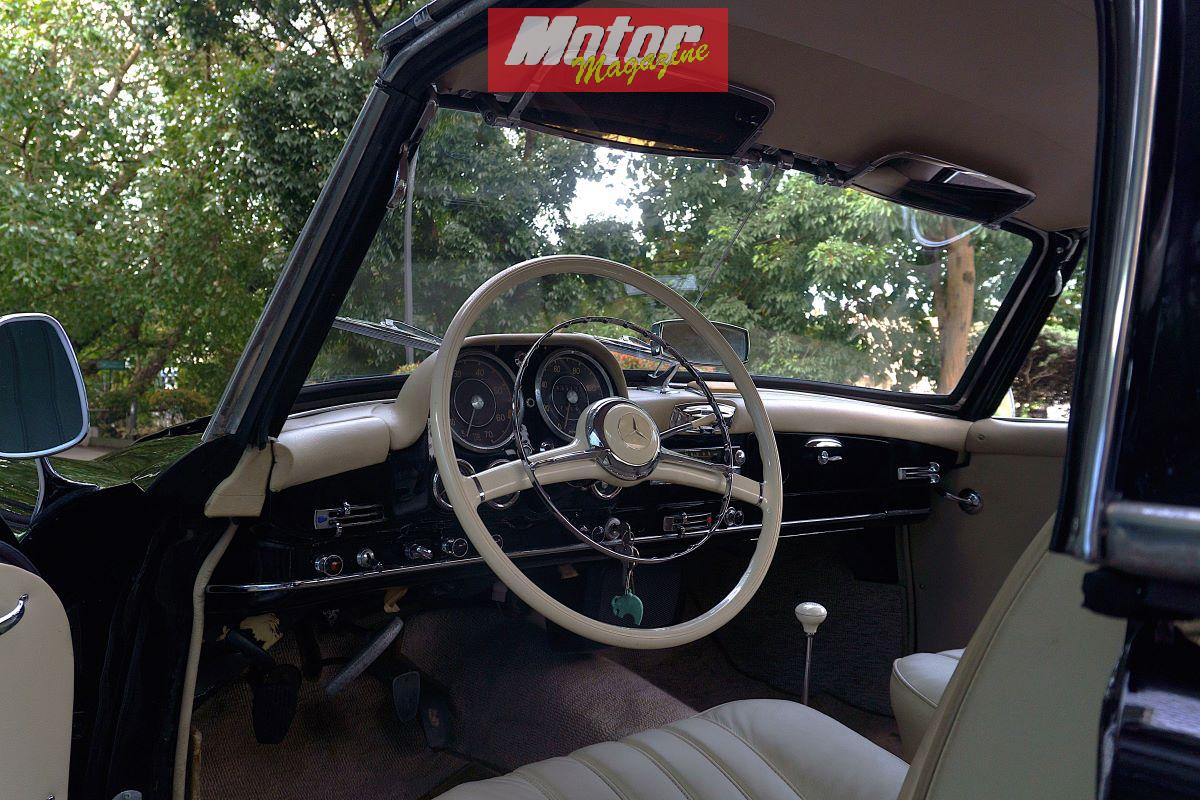
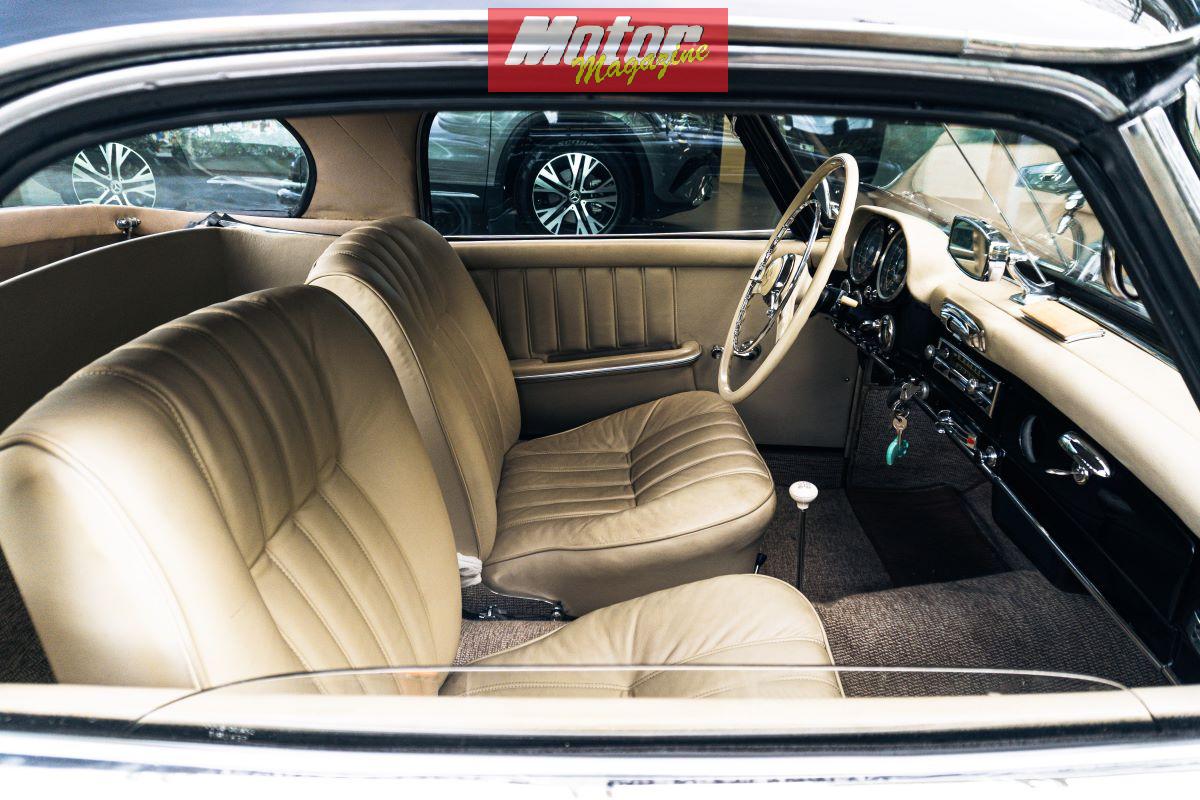
Despite its compact footprint, the 190 SL was surprisingly spacious inside. Even six footers could slide in with some finesse, though mastering the graceful entry, right foot tucked behind the clutch to clear the large steering, took a few practice runs. Once seated, the cabin felt airy, elegant, and impeccably finished, with enough room for two to travel in true Mercedes comfort.
The long bonnet might suggest an engine pushed far back in the chassis, but in reality, the compact OHC motor sat directly over the front axle, leaving generous legroom that extended well under the dash into the engine bay. The optional removable hardtop transformed the car into an all weather coupe, improving refinement while adding a dash of continental chic. In some markets you could even tick the option for a third seat, albeit a transverse arrangement behind the two front seats.
And then there was the boot, deceptively small at first glance, yet far more accommodating than most of its contemporaries. It’s one of those rare 1950s sports cars where you could fit a weekend’s worth of luggage for two without a struggle. Proof that Mercedes engineers didn’t forget practicality amid all that style.
Behind the Wheel
Driving the 190 SL today is a delight. It keeps up with modern traffic effortlessly, pulling away briskly at just half throttle. The gear ratios are short, encouraging quick rowing through the gears. We found ourselves happily puttering through Sunday afternoon city traffic in third or even fourth.
The gearshift itself is a joy: a delicate, short throw topped with a dainty knob, gently clicking through each gate with mechanical precision. A testament to the solidity of its linkage. The pedals have long travel, best handled with narrow Italian shoes, as broader sneakers and leather soles dull the finesse needed for smooth operation.
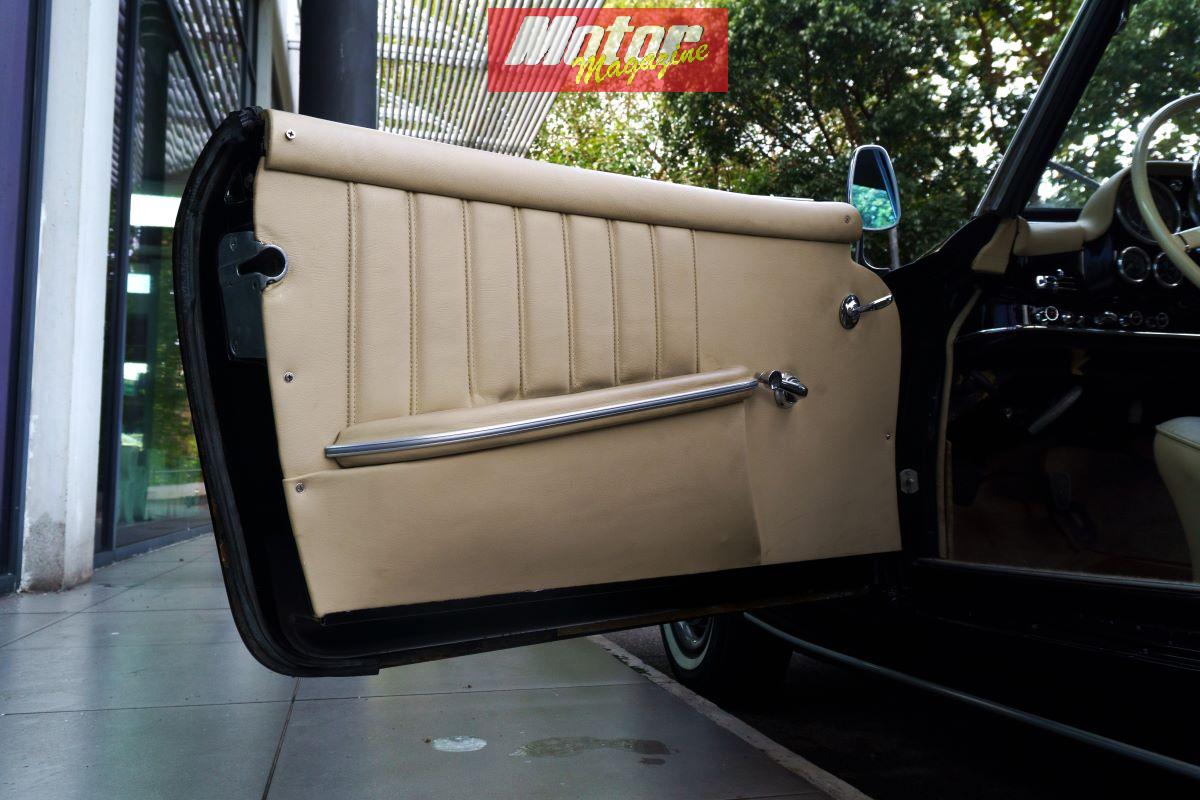
Steering, via a large Bakelite wheel and recirculating ball mechanism, is pure 1950s theatre, slightly vague on feel but full of charm. Its thin hard rim and unassisted setup is a case study on why people wore driving gloves back then. Once familiar, it proves surprisingly accurate for such an old design. Body roll is well contained, and the chassis feels quietly confident when pushed.
The only let-down, if you can call it that, is the braking. The drum brakes, at 9” in diameter, small and unassisted, were already being eclipsed by disc systems from Jaguar and Porsche by the late ’50s. Yet, the 190 SL’s pedal feel remains firm and consistent, with no fade apparent even after repeated moderately hard stops. In typical Mercedes fashion, even when it wasn’t cutting edge, it was dependable, refined, and beautifully executed.
The ride quality is excellent for a sports car; supple yet controlled, and in some ways, better than certain modern cars. That much was clear the moment it glided over the generously laid rumble strips around Colombo. The radial tyres fitted to this particular example certainly played their part, improving both comfort and composure. After all, the 190 SL originally left the factory on cross ply tyres, which were far less forgiving.
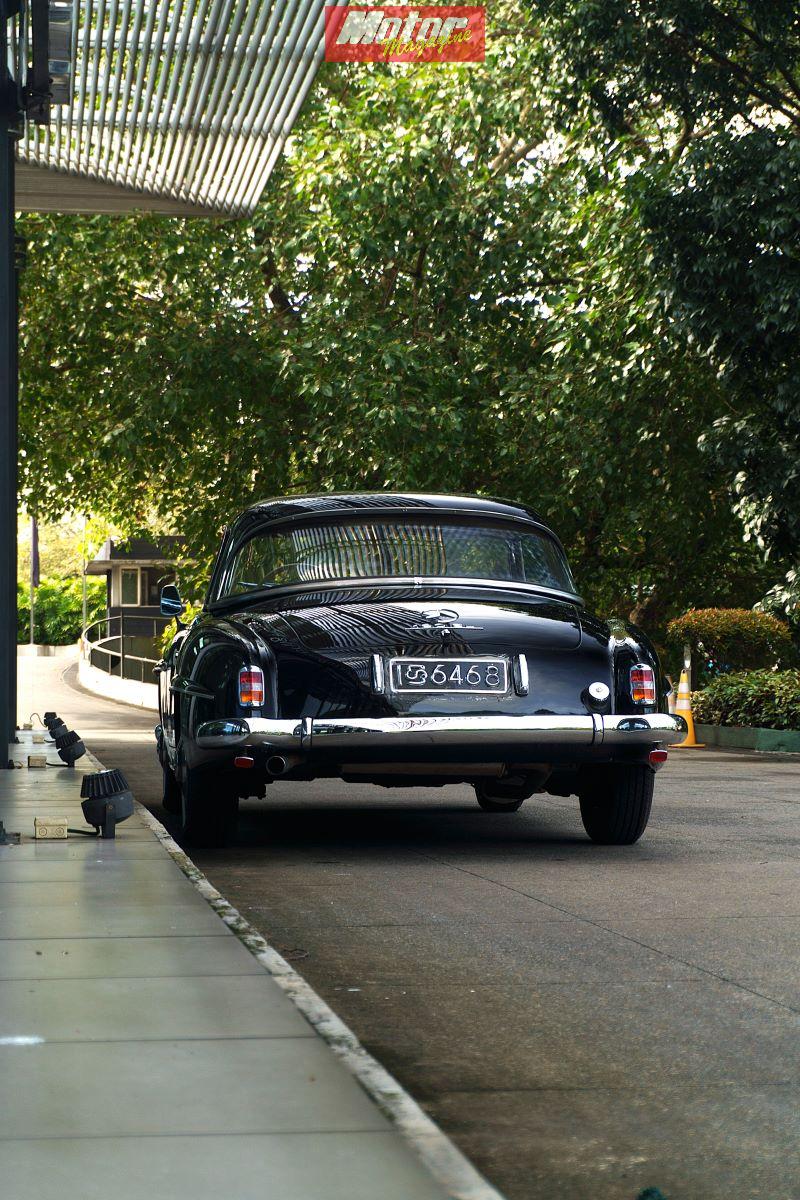
The Story of 1 Sri 6468
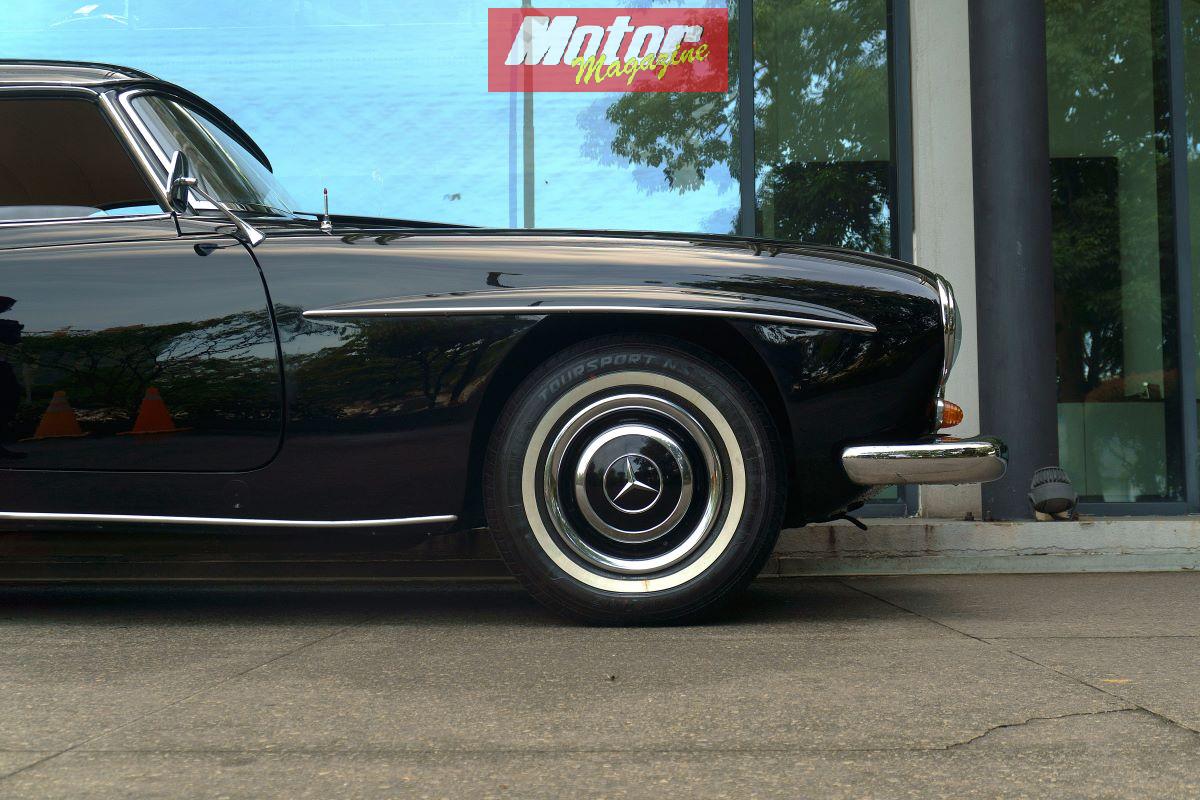
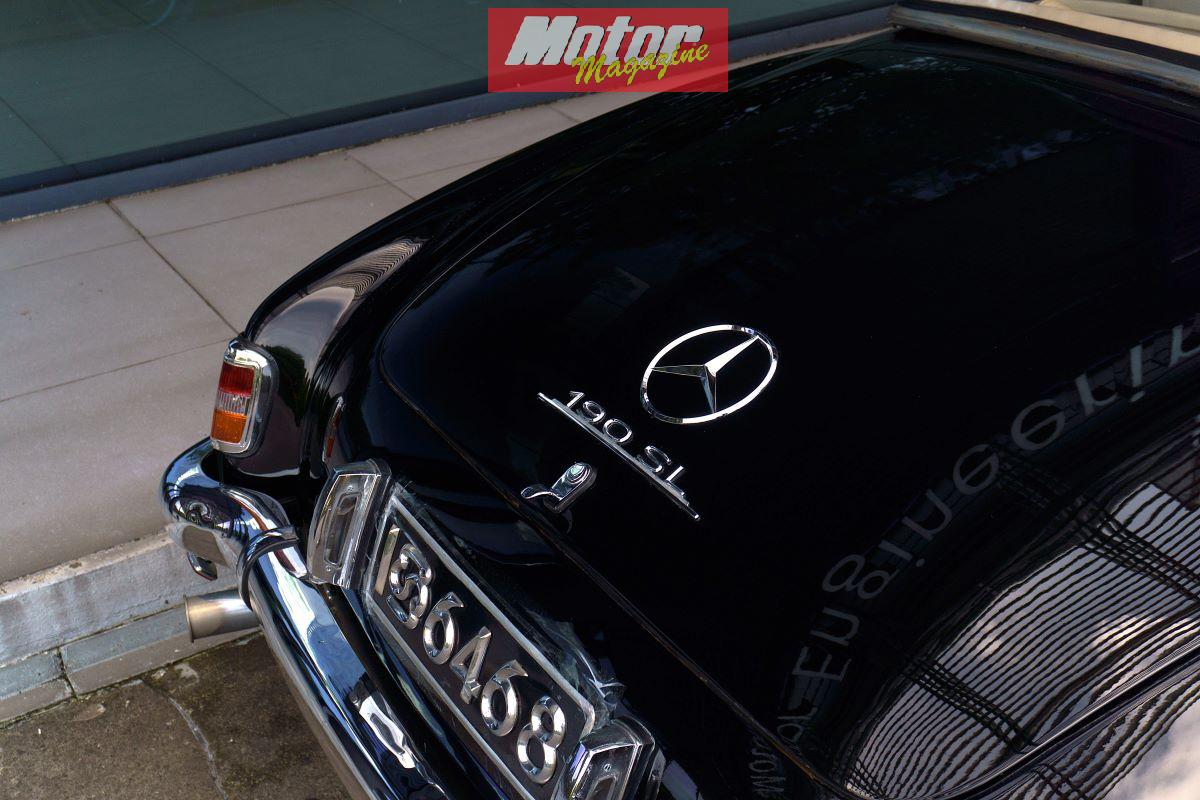
This particular 190 SL, registered 1 Sri 6468, was first imported by the German Embassy in Colombo in the late 1950s. After changing hands a few times, it eventually found a long term home with Earl Arnolda, remaining in the Arnolda family for several decades, until his daughter Debbie Arnolda decided it was time to part ways.
When Mr. Nimal Cathiraswamy purchased the car from the Arnolda’s, it was in dire need of restoration. What followed was a patient, meticulous process of sourcing the correct parts, a true global effort. Components were gathered from every corner of the world. At one point, the instruments travelled halfway across the globe for refurbishment.
In 2016, when Mr. Cathiraswamy purchased a brand new S Class,
he found the perfect workshop to undertake the restoration; DIMO. Not only
because its association with Mercedes but also because DIMO has one of the best
restoration facilities in the country.
The result was nothing short of remarkable. After a painstaking yet comprehensive restoration, the car returned to its former glory.
Today, 1 Sri 6468 takes pride of place as a permanent display at the Mercedes Benz Museum at DIMO 800 - started and driven regularly, yet preserved in the climate controlled halls of the building as a living piece of Mercedes history.
The 300 SL was the first Mercedes Benz to bear the SL badge, closely followed by the 190 SL. Yet the two were born of very different philosophies. The 300 SL was a direct descendant of lightweight, high performance racing machinery; cars that lived on the edge. Its spiritual successors were not the later SLs, but rather the likes of SLR McLaren and SLS AMG wild, uncompromising supercars that carried the same DNA.
The 190 SL, on the other hand, paved the way for a completely different kind of Mercedes Benz: the refined, comfortable Grand Tourer that combined engineering precision with elegance and civility. Its lineage continued through the 230 SL Pagoda, the R107, and the long line of boulevard cruisers that followed, cars that brought S Class comfort and craftsmanship to the open road.
Seen in that light, any notion that the 190 SL was slow or not sporty is misplaced. It represented the birth of a new kind of Mercedes, one built for the discerning driver who valued grace over aggression, and quality over theatrics.
After a weekend spent driving around Colombo, in sun and rain, through traffic and calm, there’s no doubt the 190 SL remains a deeply capable machine. It embodies the timeless Mercedes traits such as precision, comfort, and effortless style. Seven decades later, it still offers easy to live with, wind in the hair motoring in one of the most beautifully engineered packages ever to wear the three-pointed star.