

Designed to Fail
The Mercedes-Benz Fintail and the Birth of Automotive Safety

Published on 21 Sep 2026
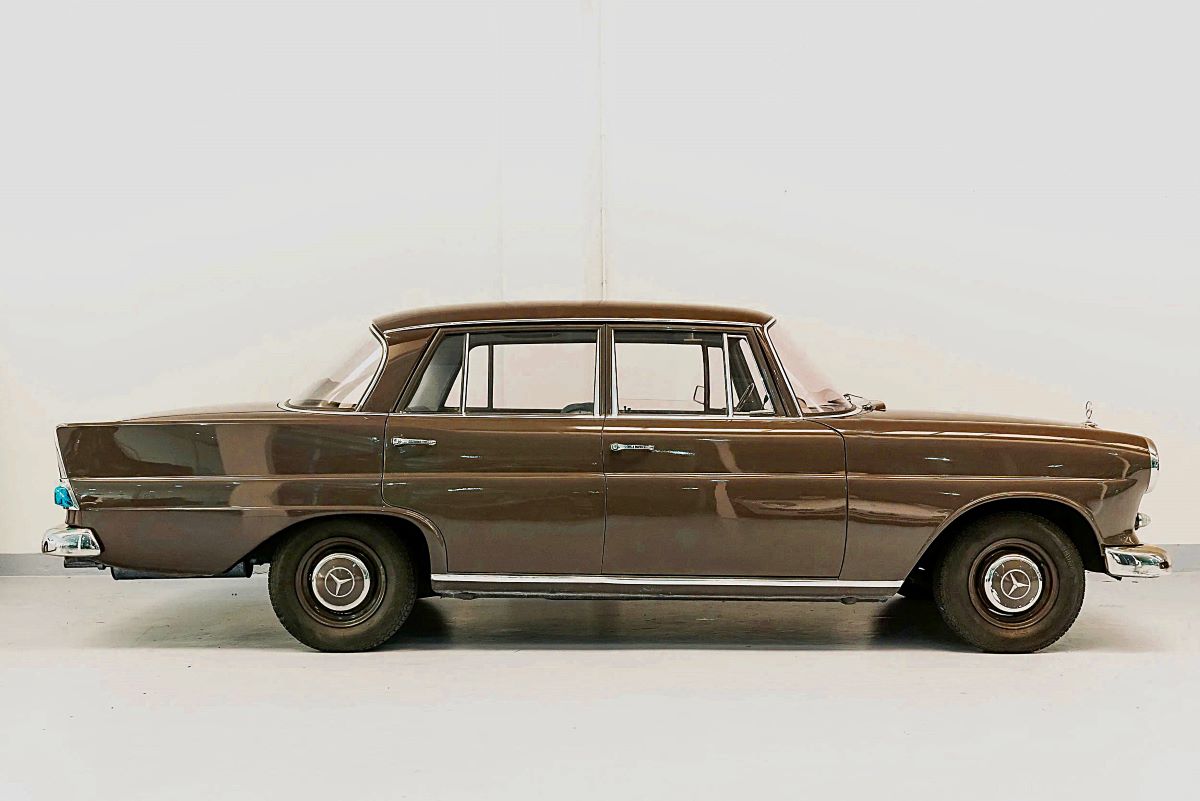
Engineering, for much of the 20th century, was all about rigidity and maintaining structural integrity under load. Now imagine the reaction when in the 1930s Béla Barényi told his superiors at Mercedes-Benz that some parts of their car bodies need to be made less rigid and designed to fail in certain places!
There was method behind the madness. In the first half of the 20th century, steel construction was still in its infancy. Structures were overengineered, as safety factors were still unclear and difficult to calculate with certainty. Roads were rough or non-existent. Cars were built to be tough in all places, right down to their chrome headlight rings, so they could endure punishment while retaining shape. When these cars crashed, they died like they lived, fighting to retain their shape in a crude, unforgiving world.
The effect on the occupants was like carrying eggs in a hard food container. Drop it, and the container survives just fine, but the eggs end up with more yolk on the outside than they originally had in them.
Now put those same eggs in a generously proportioned paper carton and repeat the experiment. The carton sacrifices itself, deforming and creasing permanently, but the eggs stand a much better chance. That was Barényi’s insight.
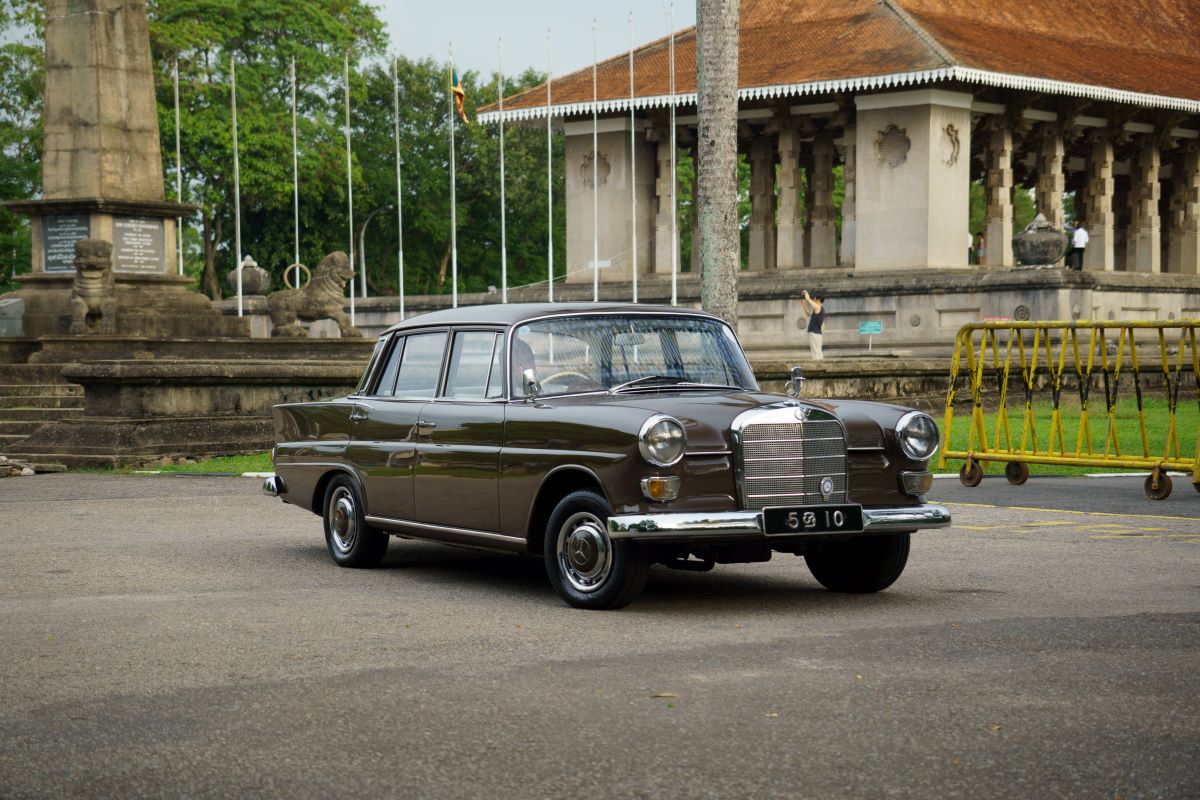
Enter the Mercedes-Benz W110, the world’s first mass market car to have crumple zones engineered into its structure, so you don’t end up like an egg in a hard container.
Innovation
It is no easy task producing one hit after the other.
Mercedes-Benz already had a world beater in the early 1950s Ponton. A monocoque
body with integrated pontoon style fenders, independent suspension at all four
corners, and an all new overhead camshaft engine placed it firmly ahead of its
contemporaries. The Ponton outsold every competitor in the European luxury
segment, surpassed only by the Peugeot 403, a similarly sized car, but one
aimed squarely at the family buyer rather than the executive class. Such was
the success of the Ponton that one could be forgiven for thinking Mercedes,
still emerging from the ashes of the Second World War, might have exhausted all
its ideas.
By 1951, Béla Barényi’s safety cell concept had already been patented, and like many great Mercedes innovations, it entered what would become a near decade long period of research and validation. The objective was clear: create a passenger compartment strong enough to eliminate internal failure points while engineering controlled deformation zones at the front and rear of the car. These crumple zones would absorb energy and extend deceleration time in a collision, reducing the forces transmitted to the occupants.
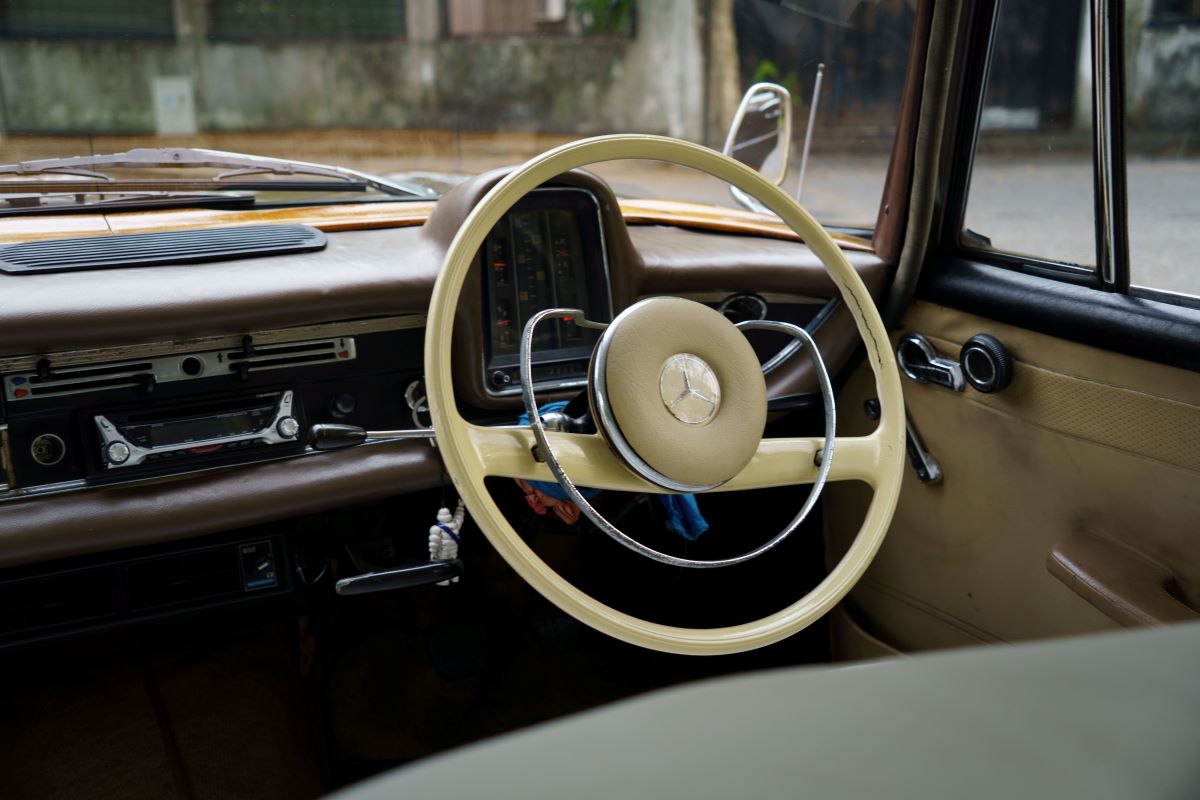
This philosophy also marked a turning point in vehicle development. Until then, crash testing had largely been the domain of technical institutes. When manufacturers conducted crash tests, it was typically for post incident investigation rather than development. Mercedes, however, subjected the fintail to extensive and systematic crash testing throughout its development, continuously refining the structure to improve occupant survivability. Even casual enthusiasts will be familiar with the grainy black and white footage of fintails being crashed in every conceivable configuration on the Discovery Channel or other popular media.
The focus on safety extended well beyond the body structure. Barényi also developed a new collapsible steering column to reduce driver injury. Earlier designs used a rigid, one piece steering shaft extending directly toward the front axle. In a frontal impact, rearward movement of the axle could turn the column into a lance, projecting the steering wheel toward the driver with devastating consequences. Barényi’s solution allowed the column to collapse telescopically, preventing intrusion into the cabin. The steering wheel itself gained a padded center, softening any secondary impact.
The rest of the interior received similar consideration. The dashboard was reshaped with rounded edges and padded surfaces to reduce injury. Switchgear was redesigned with smooth contours rather than sharp projections. Interior door handles were recessed and repositioned away from occupants’ knees, while window winders gained plastic knobs that were more forgiving in an impact. Even the interior rearview mirror was engineered to detach cleanly if struck.
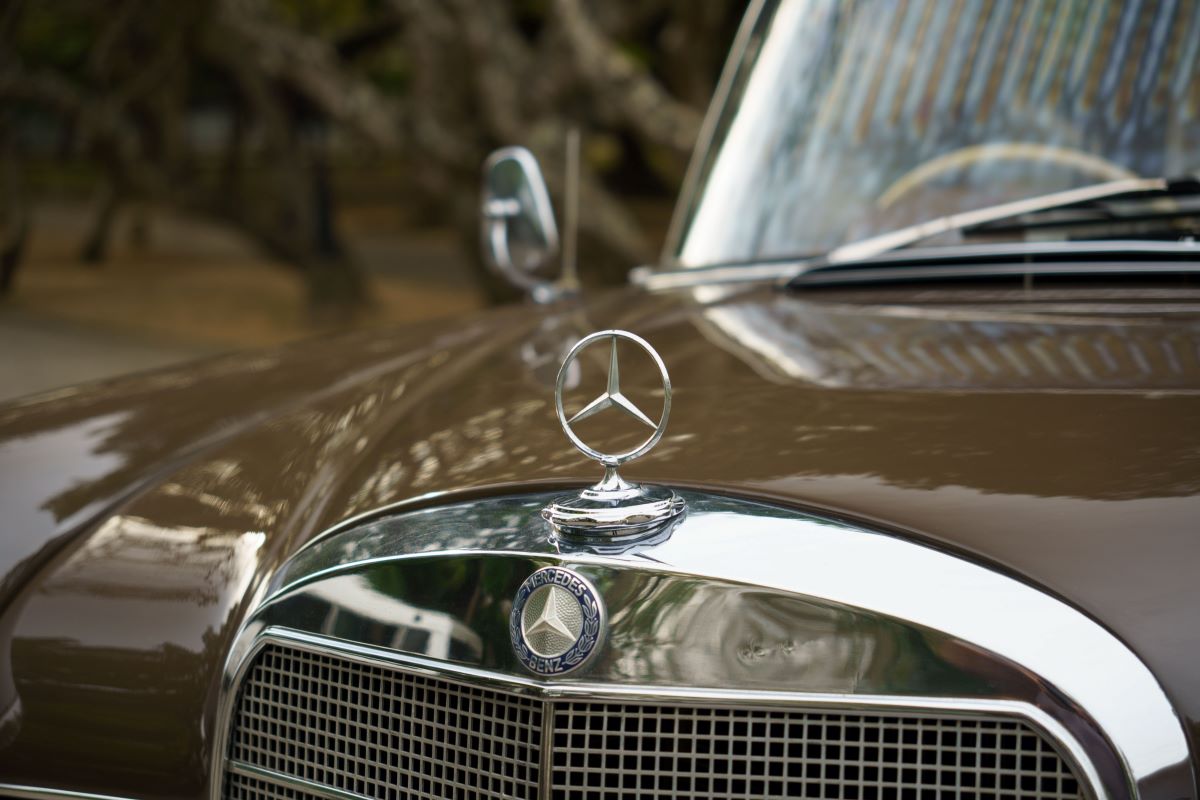
Door integrity was also addressed. The Fintail introduced wedge type door latches, designed to hold the doors securely closed even if the body structure was compromised, reducing the risk of doors being flung open and occupants being ejected during a collision.
Beyond
safety, much of which we now take for granted, the Fintail introduced several
quieter but equally important advances for Mercedes. When the Ponton arrived
eight years earlier, it replaced the prewar W136. While its integrated bodywork
was unmistakably modern, its proportions still reflected prewar thinking:
relatively tall, narrow, and upright. The Fintail, by contrast, was designed
for a different world. The safety cell demanded longer front and rear
overhangs, while a wider track and lower center of gravity improved stability.
Together, these changes established the balanced three box saloon proportions we now recognise as modern, making the Fintail more visually resolved and easier on the eye.
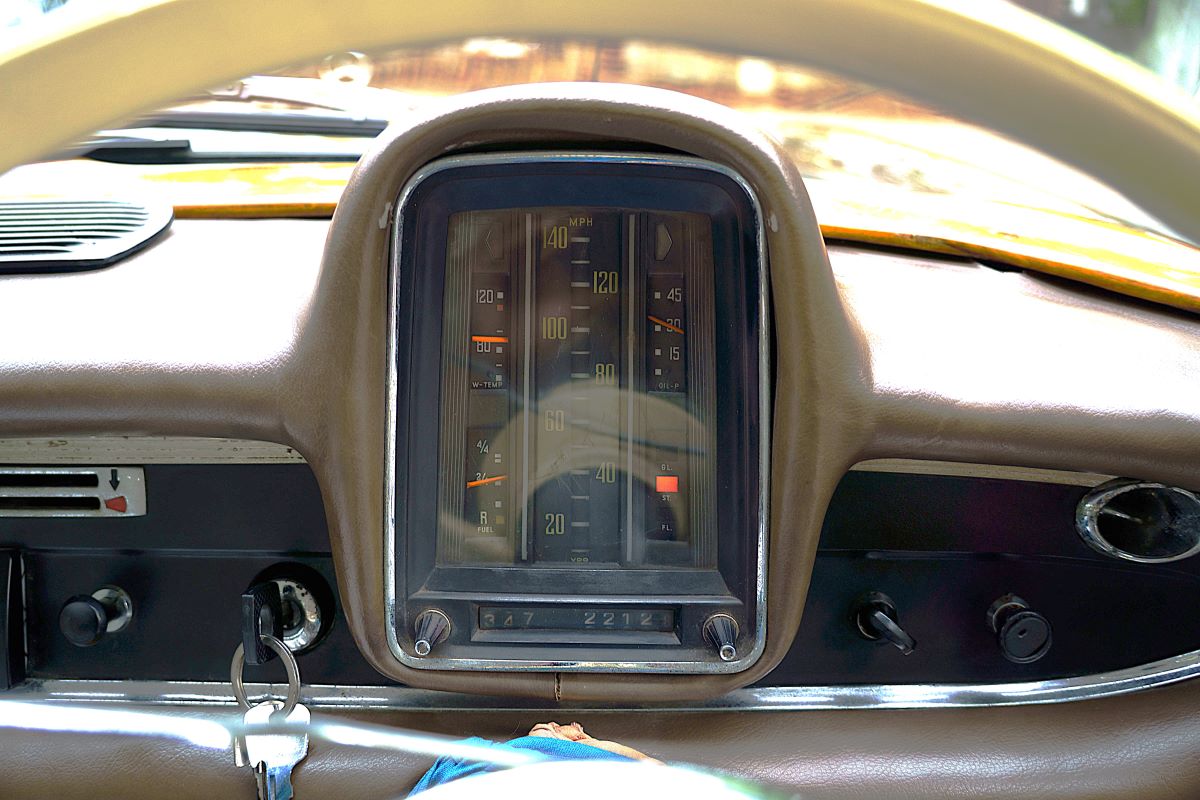
The Ponton’s small, flat window surfaces, another link to prewar styling, were also left behind. Advances in glass manufacturing allowed the Fintail to adopt curved front and rear windscreens, improving both aerodynamics and visibility. The C pillars were significantly slimmer, marking the end of a design tradition that traced its roots back to horse drawn carriages and early coach-built automobiles. Later improvements in rollover protection and regulatory requirements would reverse this trend, making pillars thicker once more. In this respect, the Fintail represents a high water mark for visibility and airiness, a quality that has rarely been matched since.
Behind the Wheel
What does a 60 year old mid-size Mercedes feel like to
drive? My expectations weren’t particularly high, having sampled the much lighter
190 SL two months earlier - a car powered by the same engine, albeit fed by
twin carburetors. Yet this W110 proved surprisingly endearing. The single carb
M121 offered similar urgency to the lighter roadster when worked through the
column mounted four speed shift gate. Pedal placement was far more ergonomic
than in earlier models and many contemporaries, making delicate footwork easy.
The gear ratios are low, clearly chosen to maximise torque and pulling power rather than outright speed. Top gear becomes the natural cruising ratio even at urban speeds, with the eight valve engine happily earning its keep at low revs. The car had no trouble jumping ahead of queues at traffic lights and staying there with very little effort. Steering exhibited the familiar age related vagueness of a recirculating ball system, yet remained surprisingly precise, save for a slight waywardness from the large rear end.
The real game changer in this particular car was the retrofitted air conditioning. It transformed the experience, allowing you to focus on the subtle mechanical outputs of the car. Apart from the unassisted steering and brakes, this made the Fintail entirely uncompromising as a daily driver, even on a commute in a tie and long sleeved shirt, as I happened to be dressed. In an era when roads were emptier and fewer buildings radiated heat back at passing traffic, it’s easy to imagine affluent owners spending far more time behind the wheel of a Fintail for these reasons, even without AC. It’s also worth remembering that while Mercedes was offering this level of refinement, the upper middle class favourite, the Austin Cambridge, was still being sold without synchromesh on first gear.
The view in and out of the car as all this unfolds is nothing short of spectacular. The recessed dashboard surfaces sit well away from the front occupants, and when combined with the curved front and rear windscreens, they open up vistas rarely experienced in cars from any other era. The rear seat occupants get no second class treatment either, aided by the low front seatbacks that preserve the sense of space.
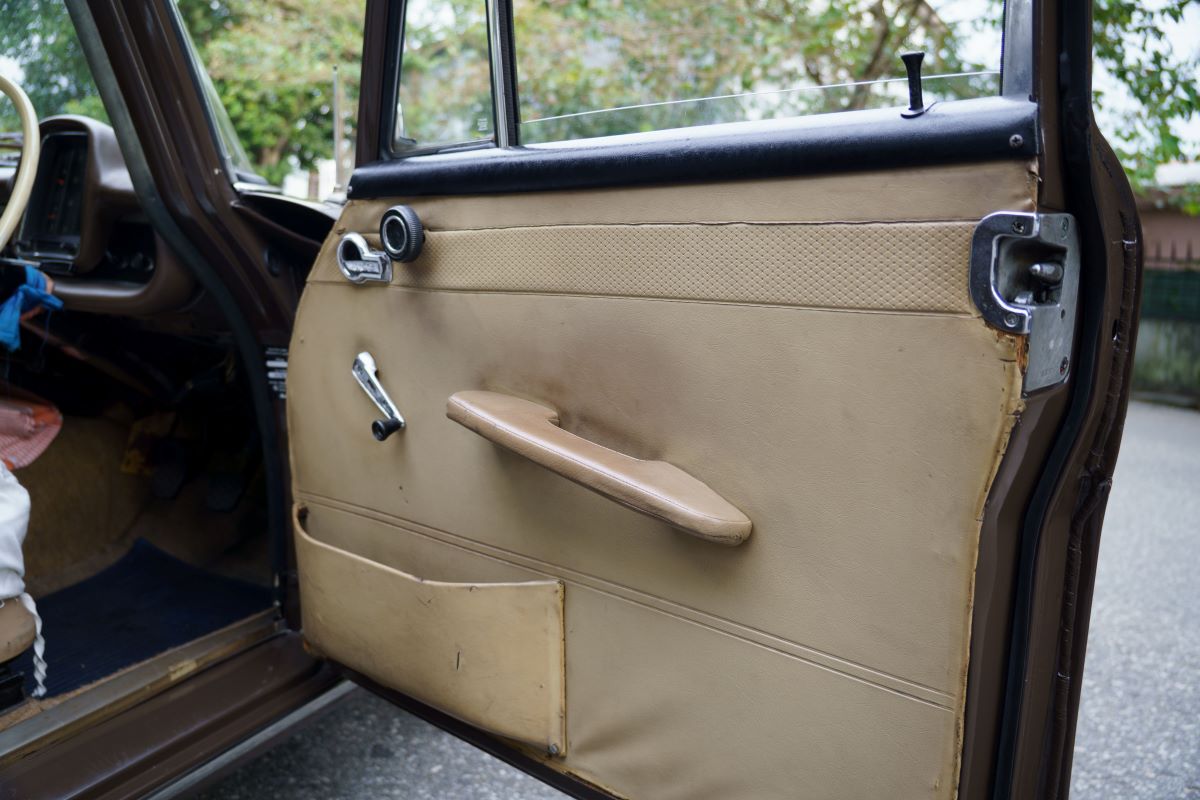
One peculiar Fintail detail never seen before or since is the vertical speedometer. Though it appears to be a constantly climbing needle, it is in fact a vertical cylinder wrapped with a right angled triangular scale. The effect is no less captivating for it. Whether through vertical speedometers or floating needles, Mercedes always seemed to introduce unsolicited innovation in instrumentation during the analogue gauge era.
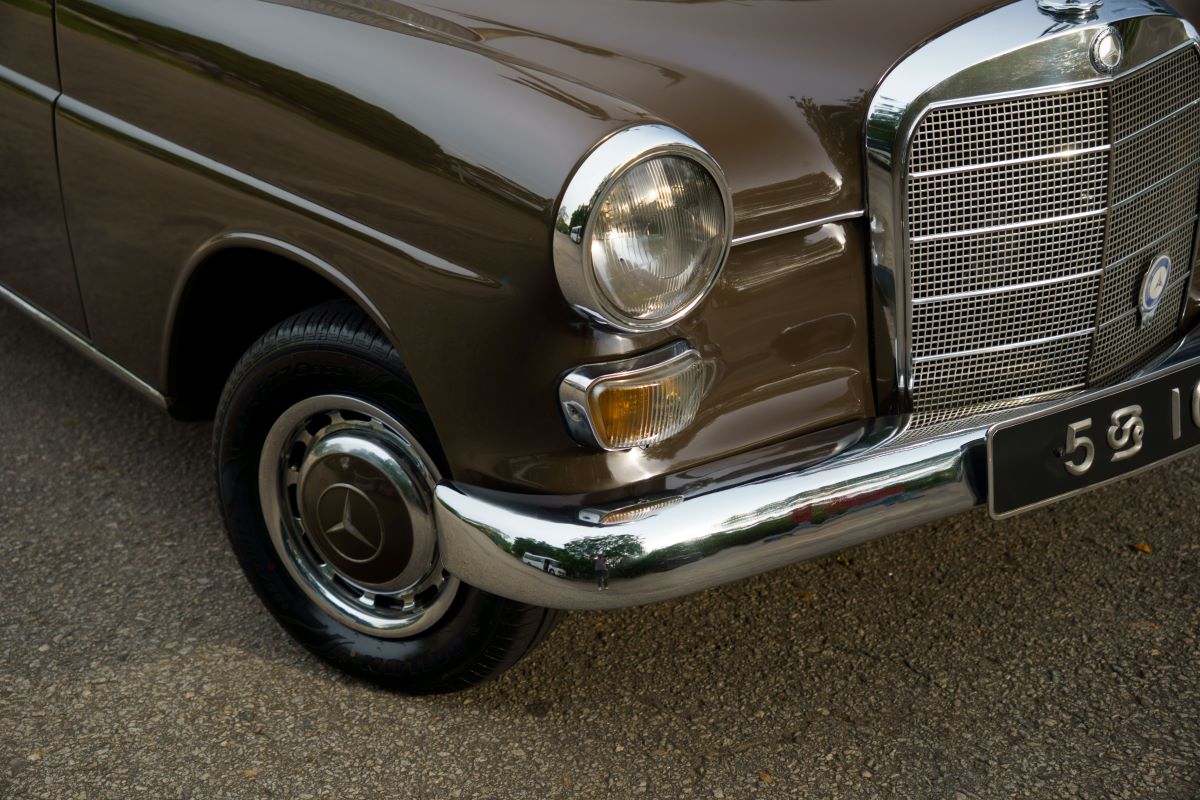
Story of 5 Sri 10
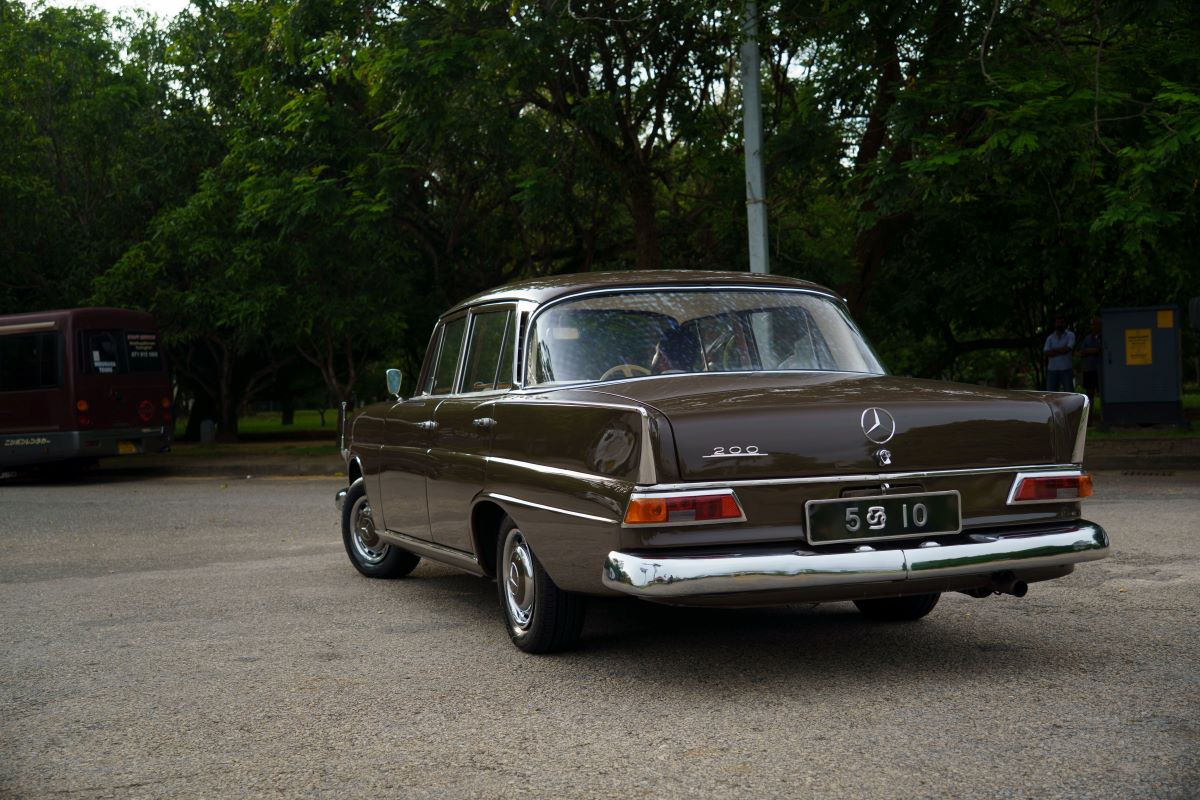
This finely restored Fintail was originally purchased new
in 1967 by Mr. Pandithage Alexander, then Chairman of Diesel and Motor
Engineering. For the Pandithage family, the car quickly became part of daily
life. The eight children remember travelling together with their parents,
filling the cabin completely. Mr. Gahanath Pandithage, Group CEO of DIMO PLC
and the present custodian of the car, recalls how he used the rear parcel shelf
as a place to stretch out on these long trips.
In the 1970s, the Fintail entered a more difficult chapter. A disagreement between Mr. Pandithage Snr. and the political party that came to power during that period resulted in the vehicle being taken into state possession and being sold through government stores. The family still remembers the moment the car was taken away and the visible distress it caused their father.
In the years that followed, Mr. Pandithage Snr. owned the Fintail’s successors, first a W115 and later a W123. Both were excellent automobiles, yet neither quite captured the allure of the Fintail and the deep attachment they had for it. Several attempts were made to locate the original car, but each search ended with no success.
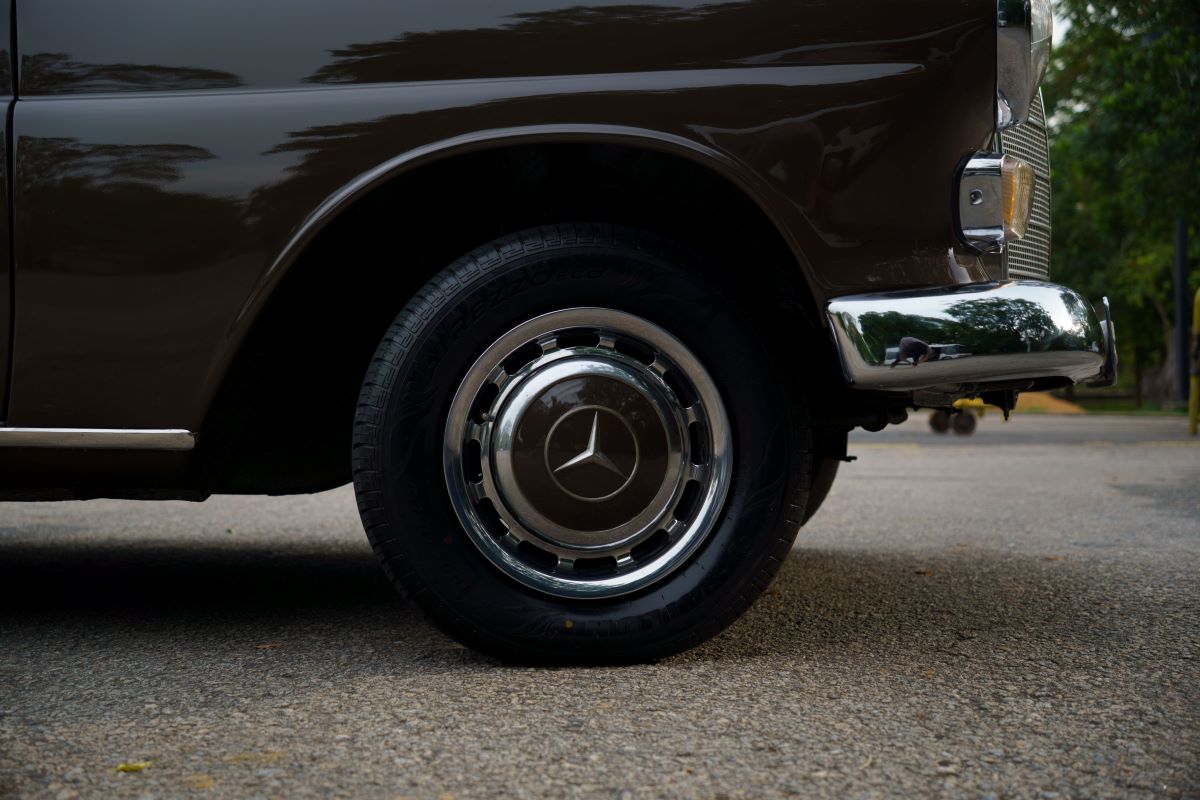
Following the passing of Mr. Pandithage Snr. in 1993, and with the 80th birthday of the family matriarch, Mrs. Gunawathie Pandithage, approaching, Mr. Gahanath Pandithage resolved to make one final attempt to recover the car. When information emerged that a Fintail believed to be 5 Sri 10 had appeared at a car sale in Matale, he cancelled his engagements and travelled immediately to the hill country.
The car he found bore little resemblance to his memories. Its colour had been changed, and the original engine was no longer present. Identification was difficult, almost clinical. What finally confirmed the car’s identity was a small burn mark on the seat, left decades earlier by the cigarette lighter during his childhood. With that detail, doubt disappeared. The car was purchased and returned to the DIMO workshop, where a comprehensive and careful restoration began.
Most components were sourced without difficulty, but the absence of the original petrol engine remained unresolved. It was believed the engine might still exist, having been removed during the car’s passage through several monasteries. After an extensive search, it was eventually located at the eighth monastery they visited. Recognising the significance of the request, the chief prelate agreed to release the engine in exchange for a set of Bosch horns.
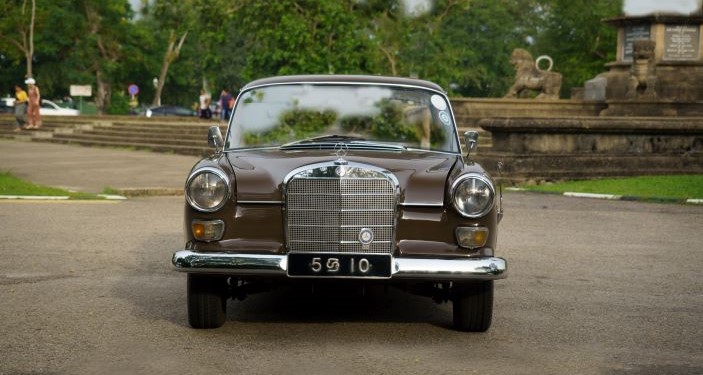
After two years of meticulous restoration, the Fintail was completed in time for Mrs. Gunawathie Pandithage’s 80th birthday. When she saw the car once again, Mr. Pandithage recalls how she wept, as it brought back decades of family history in a single moment. With that, the story of 5 Sri 10 came quietly, but conclusively, to a close.
Today, the car resides at the Mercedes-Benz Museum at DIMO 800, preserved not merely as a restored automobile, but as the embodiment of a deeply human story of affection, heartache, and eventual triumph within the Pandithage family. In that sense, its journey mirrors Béla Barényi’s own long struggle to see his ideas brought to life.
The Fintail as a Classic
The Fintail remains a much sought after classic today.
Values trail closely behind those of the Ponton, while its appeal is arguably
equal, if not greater, thanks to its more balanced and elegant proportions. It
is also a far more civilised daily prospect than the cars that preceded it,
with the added peace of mind that you are no longer an egg inside a solid food
container should the unthinkable occur.
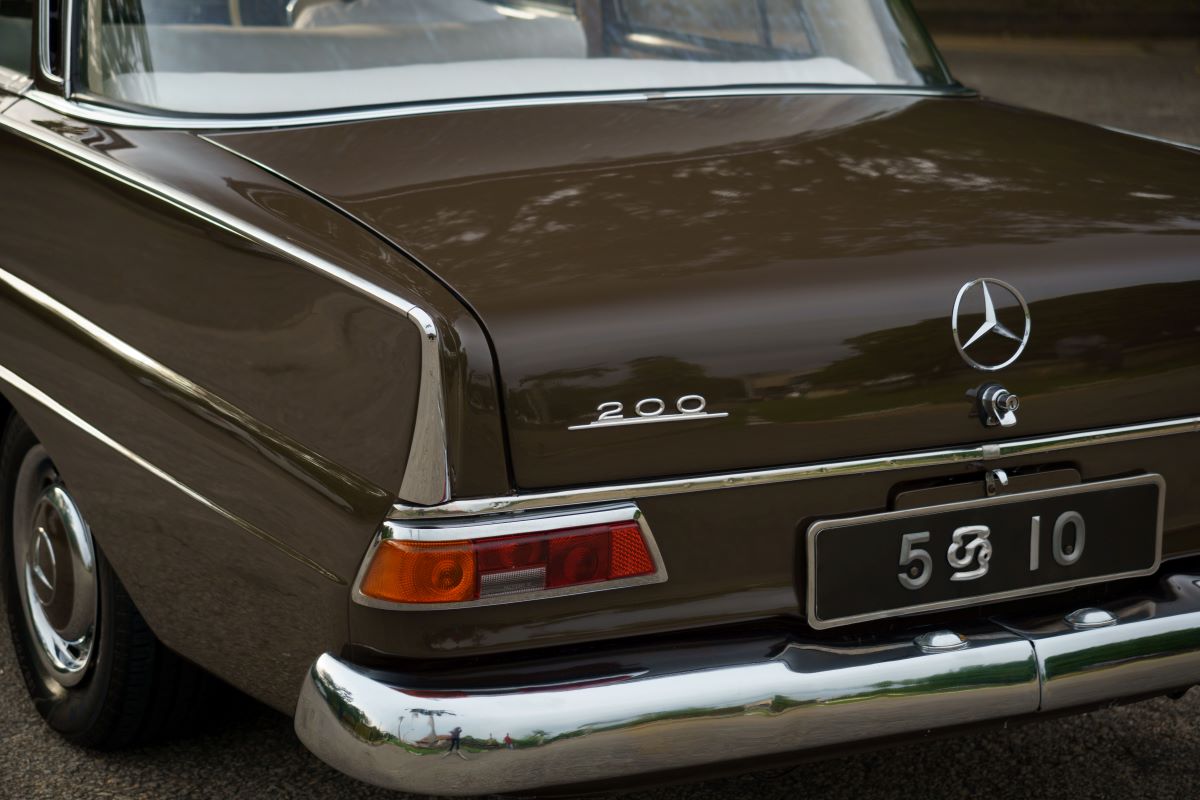
Parts availability is not as effortless as with later generations, yet donor cars remain plentiful around the world, and the Mercedes-Benz Classic program continues to offer support where it matters. As a result, the Fintail occupies a rare and compelling middle ground: modern enough to be driven and enjoyed, old enough to feel truly mechanical, and significant enough to stand as a turning point in automotive history. It will always be remembered as the moment Mercedes-Benz stopped merely building durable cars and began engineering survival itself.